July is when Western Washington’s tree year splits in two. The soft, forgiving spring — with steady rain, mild temperatures, and trees pushing new growth without stress — gives way to something harder. On July 1, 2026, the South Sound is heading into a fourth consecutive drought summer under an active drought emergency declaration, the Climate Prediction Center’s July–September outlook shows elevated odds of above-normal temperatures and below-normal precipitation, and every homeowner who has watched their conifers dull, their maples curl, or their new plantings wilt through August already knows what that means. The trees in South Sound yards need a different kind of attention from now through early fall — and most homeowners are one or two small adjustments away from getting through the summer without losing a tree.
This guide walks Western Washington homeowners through a practical, month-by-month tree care calendar for July, August, and early fall — what to do, what to skip, when to bring in an ISA Certified Arborist, and how to read the warning signs before a stressed tree becomes a hazard tree. Pacific Arboriculture serves homeowners across Auburn, Renton, and Des Moines with drought-summer plant healthcare, arborist consultations, and hazard tree assessments, and the calendar below applies to the wider South Sound from Federal Way to Puyallup.

The Big Picture: What July, August, and Early Fall Actually Demand From Trees
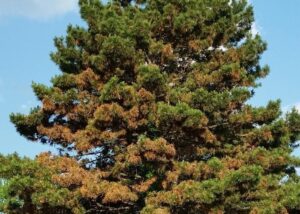
Understanding what a tree is doing physiologically in mid-summer changes everything about how to care for it. From July through early September in the Pacific Northwest, established trees are in a defensive posture — not actively growing new wood, not extending roots aggressively, but holding on to what they have while shedding water through their leaves faster than the soil can replace it. Every hot day pulls hundreds of gallons of water up through a mature Douglas Fir or Western Red Cedar. When soil moisture drops below what the roots can extract, the tree starts sacrificing tissue: interior needles brown, leaf tips crisp, and the whole canopy dulls a shade or two.
Newly planted trees — anything installed in the last three growing seasons — are in a much more precarious spot. Their roots haven’t extended past the original nursery ball, so they’re pulling water from a tight little zone that dries out fast. A first-summer maple in an Auburn front yard can be dead in ten days without supplemental water, even in a house next to a fully irrigated lawn. The tree’s roots don’t reach the lawn irrigation zone, and the surrounding native soil is bone dry by mid-July.
The Washington Department of Ecology’s June 2026 water supply update confirmed what most Puget Sound homeowners are already seeing: the drought is not over, El Niño is strengthening into fall, and the state is expecting below-normal precipitation to persist through September. That framing matters for tree care decisions from July onward.
University of Washington Climate Impacts Group: Pacific Northwest Climate Outlook
NOAA Climate Prediction Center: Long-Range Temperature and Precipitation Outlooks
July: Water Deep, Water Rarely, Water at the Dripline
The single most common mistake Western Washington homeowners make in July is treating a tree like a lawn. Lawns want frequent, shallow water — a few minutes a day from a sprinkler system that wets the top inch or two of soil. Trees want the exact opposite: infrequent, deep soaks that saturate the soil to a depth of 12 to 18 inches, delivered at and beyond the dripline where the fine feeder roots actually live. A tree watered on a lawn schedule is essentially a tree that’s never watered at all, no matter how green the grass looks around it.
The practical rule for July in the South Sound: established trees should get one deep soak every 10 to 14 days if there’s been no significant rain. That means running a soaker hose in a wide ring at the dripline for 60 to 90 minutes, or setting a slow-drip hose at the base of the tree and moving it every 30 minutes to cover the root zone. Newly planted trees need more frequent water — every 5 to 7 days — because their roots haven’t extended yet. To check if a soak was deep enough, wait 24 hours, then push a screwdriver into the soil at the dripline. If it slides in 8 inches without resistance, the water made it. If it stops at 2 inches, the top wet, but the roots didn’t drink.

A second July action that pays off through the rest of summer: refresh mulch to a 3-inch depth in a wide ring around the tree, keeping the mulch 3 to 6 inches away from the trunk itself. Wood chip or bark mulch cools the soil, holds moisture, suppresses competition from grass, and buffers the root zone against temperature swings. A Renton homeowner who does nothing else all summer except mulch and deep-water on a two-week cadence will keep their trees ahead of the drought curve. For a longer discussion of soil moisture and root health, the recent Pacific Arboriculture guide to compacted soil around mature trees covers why watering can fail even on a good schedule.
Trees Are Good (ISA Consumer): Mature Tree Care Fact Sheet
WSU Hortsense: Home Gardener Diagnostic and Care Fact Sheets
July: What NOT to Do — The Instincts That Kill Stressed Trees
The instinct to help a stressed tree usually shows up as more water more often, fertilizer to “give the tree a boost,” and cutting out any wood that looks dead or dying. Two of those three are actively harmful.
Do not fertilize a drought-stressed tree. Nitrogen fertilizer pushes the tree to grow new foliage the roots cannot supply with water. That new growth wilts, drops, or scorches, and the tree ends up in a worse position than before. Save fertilization decisions for a plant healthcare assessment in the fall or spring when the tree can actually use the nutrients.
Do not prune wood that looks dead in the heat of drought. A branch that looks bare in July may still have living tissue and dormant buds. Pruning during peak drought stress opens fresh wounds when the tree has the fewest resources to compartmentalize them. It also invites boring insects like flatheaded borers, which target stressed trees specifically. Wait until fall or dormant season for structural pruning decisions. The exception: obvious hazards — cracked limbs, split scaffolds, dead wood over walkways or driveways — should be handled by an ISA Certified Arborist any time of year.
Do not “water more” if the tree is already wilting. A tree that droops in the morning and does not recover overnight has moved past thirst into root damage. More water at that point can suffocate roots in already-saturated soil. Probe the soil first — if it’s moist at 6 inches, the problem isn’t water availability, it’s root function, and that’s an arborist consultation.
August: Watch for the Warning Signs That Turn Into September Removals
August is when drought damage in Western Washington becomes visible. This is also when arborists start seeing the failure patterns that will turn into fall removal calls: Western Red Cedars flagging brown from the top down, hemlocks with thin translucent canopies, Douglas Firs dropping needles unusually early, and maples with crispy leaf margins that look like scorch marks. Not every browning tree is dying — some interior needle browning is a normal seasonal shed — but browning that starts at the branch tips and spreads inward is a distress signal.
Three specific August warning signs that warrant an ISA Certified Arborist visit:
1. Progressive canopy dieback. Individual branches losing leaves or needles while adjacent branches stay green is not normal in August. It usually points to root damage, vascular disease (like verticillium wilt in maples), or a compartmentalized failure that started years earlier. A Des Moines homeowner who spots a whole scaffold branch going brown while the rest of the tree looks fine should schedule an assessment. For more on how to read these patterns, see the June guide to spotting drought stress in Western Washington conifers.
2. Sudden lean or ground heave. A tree that has quietly leaned a few degrees over years is one thing; a tree that visibly shifts in a summer or shows cracked soil on one side of the trunk is another. Drought soils shrink, roots lose grip, and a summer windstorm can put a stressed tree on the ground. The Pacific Arboriculture guide to leaning trees covers what a normal lean looks like versus a fail signal.
3. Bark beetle exit holes or excessive resin. Drought-stressed conifers release chemical signals that flatheaded borers, bark beetles, and other opportunistic insects detect from a distance. Small round holes in the bark, patches of dried resin, or sawdust-like frass at the base of the tree are all signs that borers have found a stressed tree. The Pacific Arboriculture guide to bark beetles in drought-stressed conifers details what to look for and when the tree can still be saved.

August: Fire-Wise Adjustments Homeowners Can Make Now
Washington’s 2026 wildfire season is projected to rival its worst years for heat and dryness, and even homeowners in the traditionally wet South Sound now think about defensible space around their homes. August is a bad month for major pruning, but there are three fire-wise maintenance actions homeowners can take without stressing the tree further:
Clear ladder fuels. Rake dry needles, fallen branches, and leaf litter out from under conifers, especially the 5-foot zone directly around the trunk. Dry duff at the base of a Douglas Fir is what turns a passing grass fire into a torching tree.
Space the woodpile away from trees. Firewood, mulch piles, and yard debris stacked against a tree trunk hold moisture, invite pests, and provide continuous fuel from ground to canopy. Move stored wood at least 30 feet from any structure or valued tree.
Note dead limbs for fall pruning. Walk the property with a notebook (or a phone camera) and mark every dead branch, hanging widow-maker, and low limb sweeping the ground. Don’t cut in August — but schedule an ISA Certified Arborist for a fall consult to address the whole list before winter storms arrive. The Pacific Arboriculture wildfire-ready tree care guide covers what a full defensible-space assessment involves.
Washington DNR: Wildfire Preparedness for Homeowners
National Integrated Drought Information System: Washington State Drought Status
Early September: The Pivot Month That Sets Up Fall and Winter
By the first week of September, night temperatures start dropping, morning dew returns, and the first meaningful rain events usually show up in the Puget Sound lowlands. This is the pivot month — the moment when the tree year swings back toward active care, and the actions taken now determine what condition trees enter winter in.
Assess winter storm risk. Drought-weakened trees are wind-vulnerable trees. Any tree that showed signs of stress through August — dieback, lean, excessive limb drop — should get a professional hazard assessment before the fall storm season starts. An arborist report or consultation from Pacific Arboriculture documents current condition, identifies specific defects, and recommends mitigation. Insurance companies and municipalities across King and Pierce counties increasingly ask for written arborist assessments before major tree work.
Plan fall pruning, not summer pruning. Structural pruning, canopy thinning for wind resistance, and deadwood removal are all appropriate from late September through early winter. Trees are heading into dormancy, wound compartmentalization is efficient, and there’s low insect and disease pressure. The Pacific Arboriculture pruning service handles most of this work between October and March.
Consider fall planting. Contrary to intuition, fall (September through November) is often the best planting window in Western Washington. Cool soil temperatures stay warm enough for root growth well into November, natural rain reduces watering requirements, and new trees have six months to establish before the next summer’s stress arrives. The Pacific Arboriculture tree installation service covers species selection, planting technique, and first-year care for Auburn, Renton, Des Moines, and wider South Sound properties.
When to Call an ISA Certified Arborist Between Now and Fall
Not every summer tree question needs a professional. But there is a real cost to waiting when the signs point to structural or health failure. The general rule: any of the following situations warrants an ISA Certified Arborist assessment before winter:
— Progressive canopy browning that started at branch tips and has spread more than 25% of the canopy.
— A tree within striking distance of the house, driveway, power lines, or a play area that has shown any lean, ground heave, or major limb drop this summer.
— Bark beetle or borer activity — small holes, resin patches, sawdust at the base — on any conifer.
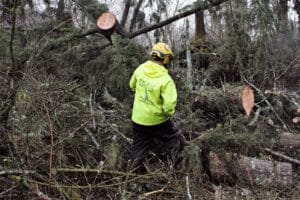
— A tree the homeowner is considering removing on their own. Removal decisions have property line implications, insurance implications, and permit implications in most South Sound cities. The Pacific Arboriculture tree removal service and the crane-assisted removal service handle everything from single-tree drops to complex urban removals with the right permits and insurance in place.
— Any commercial property, HOA, or multifamily site where the tree care budget hasn’t been reviewed since the start of the drought cycle. The Pacific Arboriculture commercial tree services team handles annual risk audits, budget planning, and liability documentation for property managers across Auburn, Kent, Tacoma, Renton, and the wider service area.
The One-Page Summer Action List
For homeowners who want to close the tab and get to work, here is the entire calendar in one place:
July. Deep-soak established trees every 10 to 14 days. Deep-soak new trees every 5 to 7 days. Refresh 3-inch mulch ring at the dripline, 3 to 6 inches off the trunk. Do not fertilize, do not prune, do not “help” a wilting tree with more surface water.
August. Continue the July watering cadence. Watch for progressive canopy dieback, sudden lean, and borer activity. Clear ladder fuels and space woodpiles away from trunks. Note dead limbs for fall pruning — do not cut in August.
Early September. Book a hazard tree assessment for any stress-signaling tree. Plan structural pruning for October through March. Consider fall planting for replacements. Talk to an arborist about any winter-storm concerns.
Homeowners across Auburn, Renton, Des Moines, Federal Way, Kent, Tacoma, Puyallup, Maple Valley, Bonney Lake, Lake Tapps, Covington, and the wider South Sound can schedule a plant healthcare consultation, hazard assessment, or arborist report through the Pacific Arboriculture contact page. ISA Certified Arborist services, storm cleanup, and emergency tree removal are available across the service area.
Frequently Asked Questions
How often should established trees be watered in a Western Washington July?
For most established trees on native soil, one deep soak every 10 to 14 days is enough — provided the soak actually saturates the soil to 12 to 18 inches at the dripline. Sandy or fast-draining soils may need water every 7 to 10 days. Homeowners can check depth with the screwdriver test 24 hours after watering.
Can homeowners prune a tree in July if it has obviously dead branches?
Structural pruning should wait for fall. But clearly dead, cracked, or hazardous limbs — especially over walkways, driveways, or roofs — can be removed any time of year and should be handled by an ISA Certified Arborist if the limb is above head height or over a target.
Is it too late to plant a new tree if the property is already in July heat?
Yes — the recommended planting window in Western Washington is October through March, when cool weather and natural rain give the roots time to establish. A tree planted in July requires intensive daily watering to survive, and even then the mortality rate is high. Waiting until fall is almost always the right call.
How can a homeowner tell if a browning conifer is dying or just seasonal?
Interior needle browning that happens uniformly through the tree, especially in late summer and fall, is often the natural seasonal needle shed and not a concern. Browning that starts at branch tips and spreads inward, or dieback concentrated on individual scaffold branches, points to drought damage, root damage, or disease. When in doubt, an ISA Certified Arborist visit is the safest diagnostic path.
Should Auburn or Renton homeowners fertilize trees during drought summers?
No — nitrogen fertilizer on a drought-stressed tree pushes new growth that the roots cannot support, making the stress worse. Save fertilization decisions for a fall or spring plant healthcare assessment when the tree can actually use the nutrients.
What is the earliest sign of drought stress in Western Red Cedars?
Interior branchlet flagging — a scattering of small brown or reddish branchlets deep inside the canopy — often shows up before the outer canopy dulls. It’s a sign the tree is shedding older tissue to conserve water. Not always fatal, but a signal that supplemental deep watering and mulching would help.
The Bottom Line for Western Washington Homeowners
A drought summer does not have to be a lost year for trees. The homeowners who get through July, August, and early September with their canopies intact are almost always the ones who did three simple things: deep watering on a 10-to-14-day cadence, a good mulch ring, and a willingness to call an ISA Certified Arborist when the signs pointed to trouble rather than waiting for winter. Everything else — the fertilizer decisions, the summer pruning temptations, the “just water more” instincts — is where trees actually get hurt. Pacific Arboriculture serves Auburn, Renton, and Des Moines homeowners with plant healthcare, arborist consultations, and hazard tree assessments across the drought summer months and into fall.