
Washington just entered its fourth consecutive drought year, and by August most South Sound yards have more trees than water to go around. Dragging a sprinkler across the property wastes water on trees that never needed it and starves the ones already in trouble.
Drought tolerance is not universal. A Western redcedar and a mature Douglas fir standing twenty feet apart have completely different needs in a dry August. One is shallow-rooted and dying of thirst; the other has handled Puget Sound summers for eighty years without help. This guide sorts common species into three watering tiers, and property owners in Lake Tapps, Edgewood, and Sumner face the same August pattern every year.
Why Species Priority Beats a Watering Schedule
Most watering advice starts with frequency and volume. That is the second question. The first is which trees are worth the water.
Two traits decide it. Root depth sets how much stored moisture a tree reaches once the surface dries. Drought adaptation sets how long it survives dry soil undamaged. A species scoring poorly on both dies first.
Federal monitoring has tracked Washington at severe to extreme drought all summer. Surface moisture is gone by mid-July across most of the South Sound, so anything relying on the top twelve inches is running on reserves.
NIDIS: Washington Drought Conditions
Tier 1: Water These First
Shallow-rooted, poorly drought-adapted, or both. These show damage fastest and recover slowest. Limited water goes here.
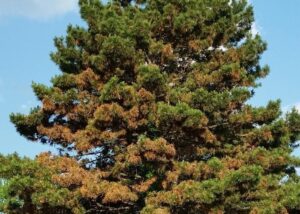
Western redcedar. The highest-priority native in the region, evolved for consistently moist soil with a shallow, spreading root plate. It is the species most visibly failing across the South Sound right now, and the browning starts at the top and works down. Past a third of the crown, recovery is unlikely.

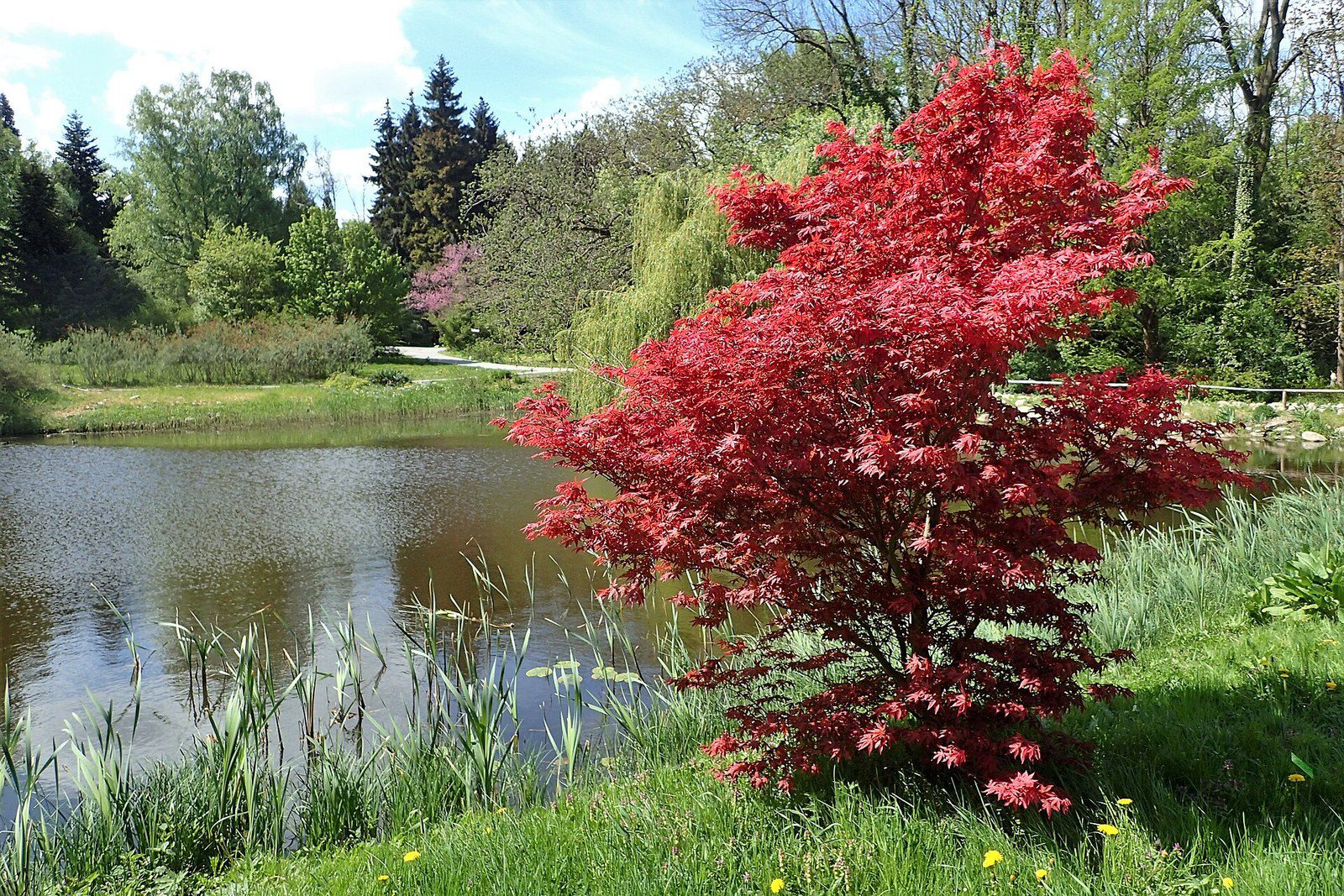
Japanese maple. Small root system, thin bark, and leaves that scorch at the margins within days. Ornamental maples on the exposed western and southern sides of a house need water well before the natives do.
Birch, dogwood, and hemlock. Shallow roots and low drought tolerance across all three. Western hemlock is an understory species that struggles in open yards. Drought-stressed birch is also the primary target for bronze birch borer, turning a water problem into a pest problem.
Anything planted in the last three years. Establishment takes roughly one year per inch of trunk diameter. Until then the roots stay confined near the original root ball, however drought-tough the species becomes later. New plantings outrank everything else here.
International Society of Arboriculture: Watering Trees
Tier 2: Water When There Is Capacity
These survive a normal dry summer unaided, but a fourth straight drought year is not normal. Each year of deficit cuts the reserves available for the next.
Bigleaf maple handles drought better than ornamental maples but sheds leaves early when pushed, cutting short the season it needs to store energy. Fruit and ornamental cherry trees turn far more prone to bacterial canker once stressed. Grand fir and Sitka spruce belong here too.
One deep soaking every two to three weeks beats frequent shallow watering. The deep root watering guide covers the mechanics; the short version is that sprinklers never reach the roots.
Tier 3: Leave These Alone
Watering established trees here is wasted effort, and sometimes harmful.
Mature Douglas fir. Deep taproot and excellent drought adaptation — it dominates this region precisely because it handles dry summers. Established firs need no extra water. Note established: a fir under fifteen feet is a Tier 1 tree.

Oregon white oak, Pacific madrone, and shore pine. All adapted to dry, well-drained sites. Madrone is prone to root rot under regular summer water, so the most common way homeowners kill one is kindness.
WSU HortSense: Home Garden Plant Problems
How to Tell If the Water Came Too Late
Drought damage appears in a predictable order, and the sequence tells you whether a tree is still recoverable.
Leaf margin browning and early leaf drop are stress responses, not death sentences — a tree shedding leaves in August is protecting itself. Wilting that does not recover overnight is more serious. Crown dieback from the top down, or branch tips that snap dry instead of bending, means the tree is abandoning tissue.
Separating heat scorch from root disease matters, because the treatments are opposite: watering a tree with Phytophthora root rot speeds the decline. A guide to reading summer leaf symptoms covers the differences, and a formal arborist report is the right call when the diagnosis is unclear.
One more rule for the season: do not fertilize a drought-stressed tree. Nitrogen pushes growth the roots cannot support. The seasonal tree care calendar covers what follows once temperatures drop.
Pacific Northwest Plant Disease Management Handbook
Arbor Day Foundation: Tree Care and Maintenance
Frequently Asked Questions
How much water does a drought-stressed tree actually need?
A useful benchmark is ten gallons per inch of trunk diameter, applied slowly enough to soak in rather than run off. A twelve-inch redcedar needs roughly 120 gallons per session. Delivered every two weeks with a soaker hose, that reaches the root zone far better than daily sprinkler time.
Should I water my Douglas fir during a drought?
If it is established and over about fifteen feet, no. Mature Douglas fir has a deep root system built for dry Pacific Northwest summers and rarely benefits from supplemental water. Young firs planted within the last three years are a different case and should be watered on the Tier 1 schedule.
Can a browning Western redcedar recover?
Sometimes. Redcedar that has lost under a third of its crown often recovers with consistent deep watering over two seasons. Beyond that threshold, recovery becomes unlikely and the tree turns into a hazard as dead limbs accumulate. An on-site assessment is the only reliable way to tell.
Is it too late to start watering in August?
No. Trees continue taking up water until dormancy, and late-season soaking helps them enter winter with better reserves. Recovery from a full summer of deficit takes more than one watering, but starting in August is meaningfully better than waiting for fall rain.
Does mulch reduce how much watering a tree needs?
Considerably. A two to four inch mulch ring extending to the drip line cuts surface evaporation and moderates soil temperature. Keep it pulled back several inches from the trunk flare, because mulch piled against bark traps moisture and invites decay.
Triage only goes so far. When a high-value tree is declining and the cause is unclear, an ISA Certified Arborist can separate drought stress from disease before the wrong treatment makes it worse. Pacific Arboriculture provides plant healthcare and tree health management across the South Sound, alongside the full range of tree services for trees already past recovery.