Residential Tree Service

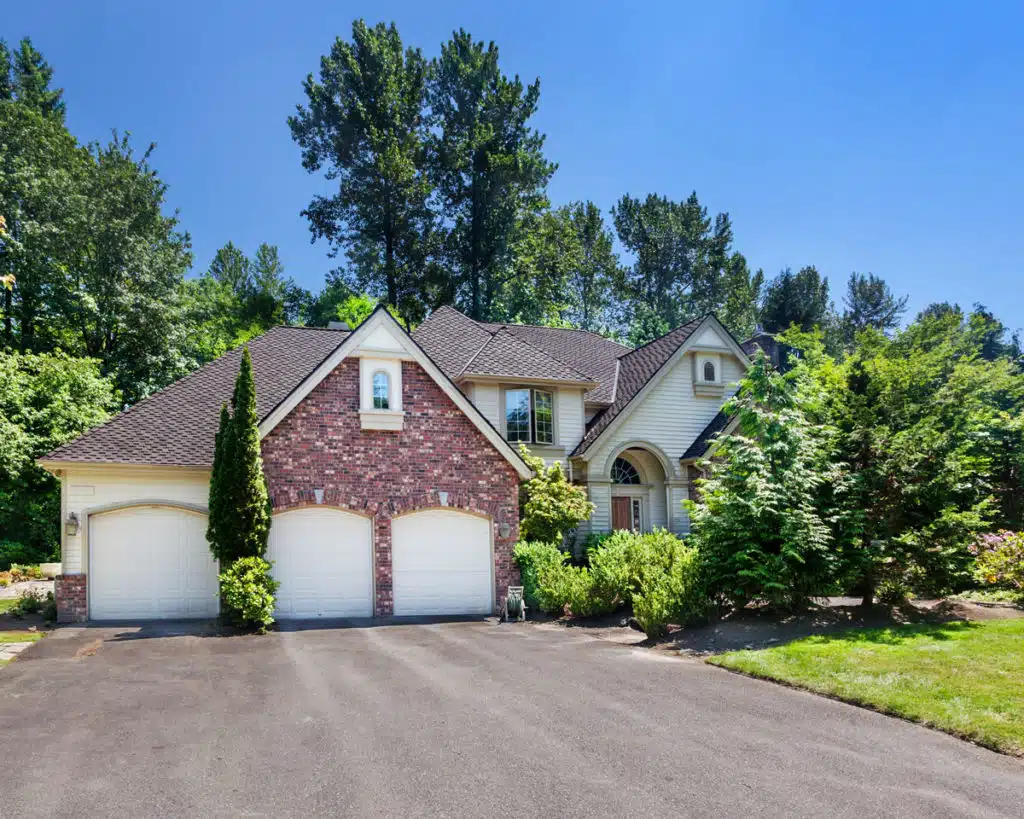
house with 3 car garage surrounded by pruned trees residential tree service

Most homeowners call us because one tree has become a problem — a fir leaning toward the roof, a maple dropping limbs over the driveway, a stump left behind by someone else. Our ISA Certified Arborists handle residential tree work across the South Puget Sound, from a single pruning visit to a full removal with cleanup. Every job starts with an arborist on site and a written number before anything is cut.

ISA Certified ArboristsNCCCO Crane Operators TCIA MemberBBB A+ Rated$1M Insured Washington L&I Contractor License PACIFA*813KG · Serving Auburn, Kent, Federal Way, Renton, Tacoma, Puyallup and the surrounding South Puget Sound

Free on-site assessment · 24/7 emergency response available


What we do at a house

Residential Tree Services for Puget Sound Homeowners

Four services cover almost every call that comes in from a residential address. Which one you need is usually settled in the first ten minutes of the on-site visit.

Tree Removal

Hazardous, declining, or in the way of a project. Trees close to a house come down in sections with rigging, or with a crane when the drop zone is too tight to work any other way. See tree removal.

Pruning & Trimming

Deadwood over the roof, limbs into the siding, clearance above the drive, and structural pruning on young trees so they need less work later. Proper cuts at the branch collar, never topping. See tree pruning and trimming.

Plant Health Care

A tree that is thinning, off-color, or losing leaves early is usually telling you something about the root zone. Diagnosis first, then soil work or treatment where it will actually help. See plant health care.

Stump Grinding

Grinding below grade so the area can be replanted or leveled, with the grindings backfilled or hauled off. Usually handled on the same visit as a removal. See stump grinding.

Want a written opinion rather than work performed? A tree inspection produces a documented condition and risk assessment — used for hazard mitigation, an insurance claim, a property tree inventory, or a permit application — see tree inspections and arborist reports.


Start to finish

How Residential Tree Work Gets Scheduled

No sales visit, no pressure to decide on the spot. The estimate is yours to sit on.

Free On-Site Assessment

An ISA Certified Arborist walks the property, inspects the trees you are asking about, and flags anything else worth knowing. We offer free consultations — there is no charge for this visit.

Written Estimate

You receive a line-itemed quote covering the work, the equipment, the access plan, and the cleanup. If a permit is likely to be required, that is called out before you sign anything.

Scheduling

Routine work is normally booked within one to three weeks depending on season and crew load. Hazard work moves ahead of routine work, and emergencies are dispatched the same day.

The Work Day

The crew protects access routes and hardscape, sets up drop zones, and works the plan. Someone on site can answer questions all day, and the arborist who quoted the job stays reachable.

Cleanup & Walkthrough

Brush is chipped, wood is hauled or left as rounds if you asked for it, and the site is raked out. We walk it with you before the crew leaves.


Before the crew arrives

What Homeowners Should Know Before Work Starts

Four things account for nearly every surprise on a residential job. All four are settled at the assessment rather than discovered on the work day.

Permits and significant treesVaries by city

Every jurisdiction here regulates removal differently, and the rule that applies to your address depends on tree size, how many trees you have already taken, and whether the tree sits in a critical area. Auburn lets a lot remove up to six trees in any twelve-month period without a clearing permit. Renton requires a permit past two significant trees in a calendar year, and for any landmark tree. On a developed residential lot in Federal Way, trees up to six inches in diameter come down without city review. Kent aims its retention rules at undeveloped property and new development rather than at established yards.

A tree in a wetland, stream buffer, or steep-slope area is regulated almost everywhere, and most cities require replacement planting once you cross the threshold. Genuinely hazardous trees are the exception in most codes, though several cities want documentation after the fact.

The full permit table, city by city with the code citation for each, is on the tree removal page. We check the current code for your address before quoting and tell you if a permit is needed.

Property protection and accessDriveways, turf, hardscape

Residential lots are tight, and the equipment that makes a job fast is also the equipment that can mark a driveway. Access routes, hardscape, and adjacent plantings are flagged before work starts. Where a machine has to sit or travel over turf, matting spreads the load, and outriggers sit on cribbing rather than directly on pavers or slate.

Soft ground after a wet week is the main variable here, which is why the access plan is written into the estimate rather than left as a work-day decision. If a route cannot be protected to a standard we are comfortable with, we say so and price the hand-carry or mini-machine alternative instead.

Trees near power lines and utilitiesWhat we do and do not do

Pacific Arboriculture does not perform line clearance work. Conductors owned by the utility are the utility's responsibility, and contact with an energized line is not a risk any tree crew should be absorbing on a homeowner's behalf. Call your provider for anything touching a primary line.

We do work on trees adjacent to lines — the far side of the canopy, roof-side limbs, the service drop clearance a utility crew will not touch — with the approach spelled out in the estimate and, where the situation calls for it, a utility de-energization arranged first. Underground utilities get located through the state one-call system before any stump grinding.

Timing, nesting season, and tree healthWhen to schedule

Hazard work happens whenever the hazard exists. Discretionary work has better and worse windows: structural pruning on deciduous trees is cleanest in the dormant season, when the branch architecture is visible and the tree is not spending stored energy on new growth. Pines and firs tolerate light work year round.

Active nests will move a schedule regardless of the calendar. The crew checks the canopy before setting up, and an occupied nest in a tree that is not an immediate hazard means the job gets rescheduled rather than worked around.

Frequently Asked Questions About Residential Tree Services

Yes. Owner-occupied homes, rentals, and small investment properties are all handled the same way. The one difference is authorization — on a rental, the person approving the work needs to be the owner or someone with written authority from the owner, because removing a tree is not a repair a tenant can authorize. Larger portfolios and association-managed properties are usually a better fit for our HOA and multifamily or commercial service.

Yes. We offer free consultations, and there is no charge for the on-site assessment or the written estimate that follows it. An ISA Certified Arborist walks the property, inspects the trees you asked about, and gives you a number in writing with no obligation to book. What is not free is a formal written arborist report — that is a separate deliverable with a separate price, because it is a documented professional opinion rather than a quote for work.

Routine pruning and removal work is normally booked one to three weeks out, depending on the season and how the crews are loaded. Hazard work moves ahead of routine work. Storm damage and anything actively threatening a structure is dispatched the same day on our 24/7 emergency line at (206) 909-2170. Late fall through winter storm season is the busiest stretch of the year, so lead times stretch.

Access routes, hardscape, and adjacent plantings are flagged before the crew sets up. Matting spreads the load where a machine has to travel over turf, and outriggers sit on cribbing rather than directly on pavers. The access plan is written into the estimate, so anything that cannot be protected to a standard we are comfortable with is raised before you book rather than discovered on the work day. Certificates of insurance are available on request.

Often that is the right call. An inspection produces a documented assessment of the tree’s condition, structure, and risk — species and measurements, signs of decay or decline, what the realistic failure mode is, and whether the tree can be retained with pruning instead of taken down. That documentation is what a city, an insurer, a builder, or a neighbor will actually accept. See arborist reports and consultations for how tree inspections and written assessments are handled and what they cost.

Yes. Pacific Arboriculture holds Washington L&I contractor license PACIFA*813KG, carries $1M liability coverage, and is a TCIA member and BBB accredited. Six ISA Certified Arborists are on staff, and every certification number is published on this page linked to its record with the International Society of Arboriculture so you can verify it yourself. Pesticide and treatment work is covered under WSDA license #109480.

Brush is chipped on site and hauled off, and haul-off is included on every tree removal. Trunk wood is loaded as rounds unless you want it left — plenty of homeowners do. Stump grindings can be backfilled into the hole, spread as mulch on site, or hauled away. Whichever option you pick gets noted on the estimate so the crew arrives set up for it.

Pacific Arboriculture works across south King County and north Pierce County from our shop in Auburn. These are the 21 communities we serve and the ZIP codes they cover.

King County

  • Auburn — 98001, 98002, 98092
  • Kent — 98030, 98031, 98032, 98042
  • Federal Way — 98003, 98023
  • Renton — 98055, 98056, 98057, 98058, 98059
  • Fairwood — 98058
  • Covington — 98042
  • Maple Valley — 98038
  • Burien — 98146, 98148, 98166, 98168
  • SeaTac — 98148, 98158, 98168, 98188, 98198
  • Tukwila — 98108, 98168, 98178, 98188
  • Des Moines — 98148, 98198
  • Normandy Park — 98148, 98166, 98198
  • Pacific — 98001, 98047

Pierce County

  • Tacoma — 98402, 98403, 98404, 98405, 98406, 98407, 98408, 98409, 98418, 98421, 98422, 98443, 98444, 98445, 98446, 98465, 98466
  • Puyallup — 98371, 98372, 98373, 98374, 98375
  • Fife — 98424
  • Milton — 98354
  • Sumner — 98390, 98391
  • Edgewood — 98371, 98372
  • Bonney Lake — 98391
  • Lake Tapps — 98391

Several of these communities share a ZIP code with a neighbor, so seeing the same number twice is normal. Puyallup includes South Hill, and the Tacoma list covers the Midland, Summit and Parkland areas. Not sure whether you are in range? Call (206) 909-2170 with your address and you will get a straight answer. City-by-city detail is on the areas we serve page.

24/7 response

Emergency Tree Removal at a Residence

A tree on the roof, a failure across the driveway, or a split leader hanging over a bedroom is not a wait-until-Monday problem. Call and a crew is dispatched to make the site safe. Emergency work is quoted on its own hourly structure, and the arborist documents the position of the tree before anything moves — which is usually what an insurance adjuster asks for first.

Pricing

What Residential Tree Work Costs

Residential work is bid by the tree and the site rather than off a rate card. Size and diameter set the baseline; access, what sits under the tree, and how the debris leaves the property move the number from there. Two identical firs on the same street can price differently because one has a clear drop zone and the other is over a garage roof.

The published size-by-size ranges live on one page rather than being repeated across the site. See the tree removal cost estimator for current ranges by diameter and height.

Pricing is approximate and confirmed in writing after the on-site assessment. A $500 minimum applies to tree service work booked as a standalone visit, and a $250 minimum applies to stump grinding. Small pruning jobs are normally added to a larger project rather than run as their own visit. Every quote depends on site access, work zone obstacles, the equipment required, priority scheduling, and whether the wood leaves the property or stays as rounds. Debris haul-off is included on every tree removal. Emergency work is quoted on a separate hourly structure. Written arborist reports are priced separately, starting at $400 for residential and right-of-way work. Reports are not only for permit applications — tree inventories, risk assessments for hazard mitigation, and documentation for an insurance claim or a liability question are all common requests. A report sets out conditions, risk and recommendations; it is not a permit and does not commit a city to approving the work.

The crew on your property

ISA Certified Arborists

Every certification number below links to that arborist’s credential record with the International Society of Arboriculture, so you can verify it before anyone sets foot on your property.

Ryan Seeley, ISA Certified Arborist at Pacific Arboriculture
Ryan Seeley
Founder & Owner
ISA PN-8096ATTRAQ · Climber Specialist · NCCCO
Tom Larson, ISA Certified Arborist at Pacific Arboriculture
Tom Larson
Crew Lead
ISA PN-373405A
Brandon Harber, ISA Certified Arborist at Pacific Arboriculture
Brandon Harber
Crew Lead
ISA PN-384451A
Brandon Danioth, ISA Certified Arborist at Pacific Arboriculture
Brandon Danioth
Training Manager
ISA PN-373406ATRAQ Qualified
Mitch Flannery, ISA Certified Arborist at Pacific Arboriculture
Mitch Flannery
Arborist Consultant
ISA PN-9076ATRAQ Qualified

Washington L&I Contractor License PACIFA*813KG · WSDA Pesticide Applicator #109480 · $1M liability insured

Schedule Residential Tree Service

Send an address and a photo of the tree and you will get a straight answer on what it needs, what it does not need, and a written number. We offer free consultations, and nothing gets scheduled until you have the estimate in hand.