Follow us Online:

Trees decline slowly before they fail suddenly. A thinning canopy, off‑color needles, early leaf drop, sticky honeydew under a maple — these are early signals, and most of them are treatable when they are caught in time. Pacific Arboriculture’s ISA Certified Arborists diagnose and treat tree health problems across Auburn, Kent, Federal Way, Renton, Tacoma, Puyallup and the surrounding South Puget Sound: deep root fertilization, pest and disease management, and scheduled monitoring for the trees you intend to keep.
Free on-site consultation and assessment · Written diagnosis and treatment plan
Plant health care is diagnosis first and treatment second. The same thinning canopy can be drought, compaction, root damage or an insect, and each one calls for a different response — so every program starts with an ISA Certified Arborist on site.
Compacted, nutrient‑poor soil is one of the most common reasons established trees decline on developed lots. Deep root fertilization injects slow‑release nutrients under pressure into the root zone, below the turf and past the compacted surface layer where a broadcast product never reaches.
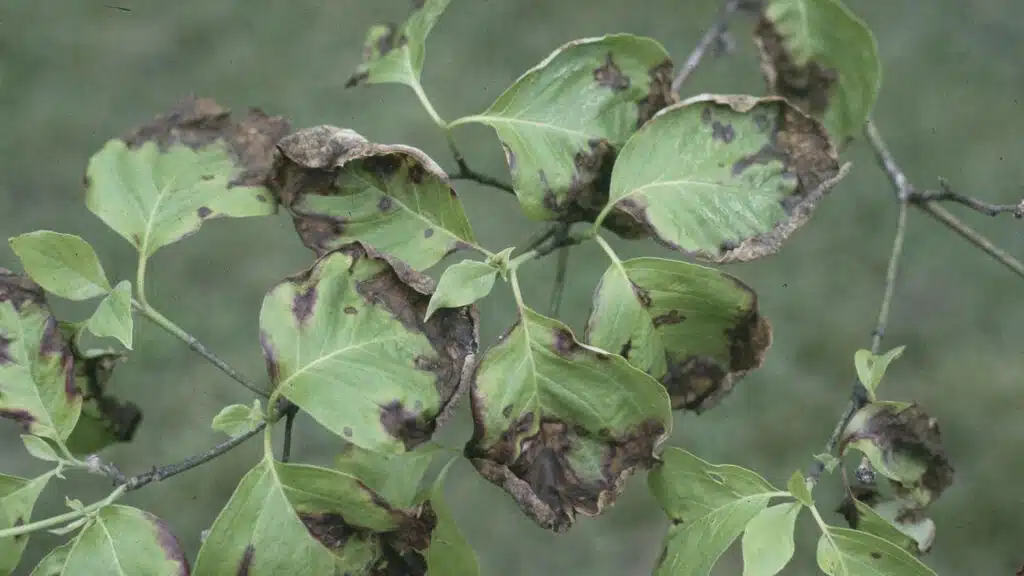
Aphids, tent caterpillars, borers, anthracnose, needle blights and root diseases are identified on site and treated by WSDA‑licensed applicators using trunk injection, soil application or foliar treatment — whichever the pest and the site call for.
Slow‑release, species‑appropriate feeding placed in the root zone where trees actually take it up, paired with correct mulch depth. Mulch piled against a trunk does more harm than no mulch at all, so depth and placement are part of the work.
Construction traffic, parking and years of foot traffic squeeze the air out of soil, and roots suffocate long before the canopy shows it. Air excavation and vertical mulching open that soil back up.
Structural problems are a pruning question rather than a treatment question — see tree pruning and trimming. If a tree is already past saving, tree removal is the honest answer, and we will say so.
Plant health care services in detail:
Treatment metered directly into the vascular system by a WSDA‑licensed applicator, with nothing drifting onto the rest of the property.
Needle blights, anthracnose, cankers and root disease identified on site, then treated on the schedule the pathogen actually responds to.
Targeted foliar and dormant applications for the pests a spray genuinely reaches, timed to the stage when they are vulnerable.
Monitoring first, treatment only when a pest crosses a threshold that puts the tree at real risk.
Slowing shoot growth on trees under wires or crowded by structures, which stretches the interval between prunes.
Slow‑release feeding placed in the root zone, and mulch at the correct depth and distance from the trunk.
Bulk arborist wood chips dropped at your property for a flat $50 delivery fee, subject to route availability.
You get a written diagnosis before anything is applied, and a record of what was found and treated afterward.
An ISA Certified Arborist inspects each tree, reads the site — compaction, drainage, root‑zone conditions and recent disturbance — and identifies the pest, disease or environmental stress behind the symptoms.
You receive a plan built for your property — species‑specific feeding, a monitoring schedule, mulching guidance, and any pruning that should happen alongside treatment.
Applications are made at the point in the season when they work: dormant oil in late winter, root‑zone feeding as soil warms, insect treatment when scouting confirms the pest is active.
Scheduled visits track how each tree responded, catch new problems early, and adjust the plan as trees mature or the weather turns.
Written updates and photo records summarize what was found, what was treated, and what to watch for — a multi‑year health history that is useful for insurance and property disclosures.
Timing decides whether a treatment does anything at all — the same product applied eight weeks late is wasted money. Open the panels below for the seasonal windows we work to and for how material is applied.
| Season | What is done in this window |
|---|---|
| Late winter Feb – Mar | Dormant oil for overwintering aphid, scale and mite eggs, while the canopy is bare and coverage is complete. Best time to spot structural defects and deadwood. |
| Early spring Mar – Apr | Deep root fertilization as soil warms and roots start taking up nutrients. Preventive treatment before bud break on species with a history of foliar disease. |
| Late spring May – Jun | Peak aphid and tent caterpillar activity. Treatment happens once scouting confirms the pest is building, not on a calendar guess. |
| Summer Jul – Aug | Drought stress management and watering guidance, plus borer treatment on stressed conifers. Heavy fertilization is avoided during heat and drought. |
| Fall Sep – Nov | Deep root fertilization after leaf drop, soil decompaction, and the best planting window of the year in western Washington. |
Windows shift year to year with the weather. Scouting, not the calendar, decides when an insect treatment is applied.
Trunk injection places material directly into the tree’s vascular system through a sealed injection port. Nothing is sprayed into the air and nothing reaches the surrounding soil, which is why it is our first choice on properties with children, pets, vegetable gardens or beehives nearby.
Soil and root‑zone application delivers nutrients or systemic material to the roots themselves. Foliar treatment is reserved for cases that genuinely need surface coverage, such as dormant oil or an active foliar disease. All applications are made by applicators licensed by the Washington State Department of Agriculture under license #109480, and you are told in advance what is being applied and whether there is any re‑entry interval to observe.
Not every declining tree needs a product. Some need water, some need mulch and a decompaction pass, and some need a sprinkler head moved off the trunk.
Most properties settle into two or three visits a year: a dormant application in late winter, root-zone feeding in spring or fall, and a mid-season scouting visit. Trees under active pest pressure or recovering from construction damage are seen more often until they stabilize.
The trees common to western Washington yards and commercial sites — Douglas fir, western red cedar, hemlock, pine and spruce, along with maple, birch, oak, dogwood, cherry, and fruit trees. Treatment is chosen for the species and the specific problem, never applied as a blanket program.
Trunk injection places material inside the tree itself, so nothing drifts through the air or lands on soil, lawn or garden beds. That is why it is the first choice on family properties. When a surface application is genuinely needed, you are told beforehand what is used and whether there is any re-entry interval.
Typical annual residential programs run from about $200 for a single specimen tree to $900–$1,800 for a property with five to ten trees, depending on size and treatment frequency. The on-site assessment and written quote are free.
Pruning and removal deal with structure — what the tree looks like and whether it is going to fail. Plant health care deals with why the tree is struggling in the first place: soil, roots, nutrients, insects and disease. The two work together, and neither substitutes for the other.
Not usually. Both run in cycles, and a heavy year is often followed by a light one as predators catch up. Treatment is worth it when honeydew, defoliation or repeat pressure is affecting a tree you value, which is why we scout before recommending anything.
Pacific Arboriculture works across south King County and north Pierce County from our shop in Auburn. These are the 20 communities we serve and the ZIP codes they cover.
King County
Pierce County
Several of these communities share a ZIP code with a neighbor, so seeing the same number twice is normal. Puyallup includes South Hill, and the Tacoma list covers the Midland, Summit and Parkland areas. Not sure whether you are in range? Call (206) 909-2170 with your address and you will get a straight answer. City-by-city detail is on the areas we serve page.
A thinning crown, dieback in the top, sudden yellowing, sap running down a trunk, or a tree that leafed out weeks after its neighbors — those are worth a look before they turn into a removal. An ISA Certified Arborist will come out, inspect the tree, diagnose what is wrong, and put the findings in writing at no charge.
Plant health care is priced on the number of trees, their size, and how often they need to be treated and inspected. The ranges below reflect typical annual residential programs across the South Puget Sound service area.
| Program Tier | Typical Annual Range |
|---|---|
| Single high-value specimen tree | $200 – $500 |
| Small residential property (2 – 5 trees) | $400 – $900 |
| Medium residential property (5 – 10 trees) | $900 – $1,800 |
| Large estate or HOA common area | $1,800 – $5,000+ |
Pricing shown is approximate and covers site evaluation, deep root fertilization, pest and disease monitoring, scheduled inspections and written seasonal reports. Smaller treatments are normally folded into an annual program or added to other scheduled work on the property. The on-site assessment and the quote are free either way.
Treating a tree almost always costs less than replacing it. For what removal actually costs when a tree is past saving, see the tree removal cost estimator, and for a documented risk opinion see arborist reports and consultations.
Every certification number below links to that arborist’s credential record with the International Society of Arboriculture, so you can verify it before anyone sets foot on your property.
Washington L&I Contractor License PACIFA*813KG · WSDA Pesticide Applicator #109480 · $1M liability insured
Most of the trees we are asked to remove could have been kept if someone had looked at them two years earlier. Book the free on-site assessment and find out which category yours is in.
Call Us Now
Superior tree service from planting & pruning to removal & replacement.