
Late May pruning is a species-by-species call. Pruning a cherry tree right now is the correct window; pruning a maple right now is a mistake; pruning a Douglas fir to “shape it up” is rarely advisable at any time of year. This guide covers what to cut now, what to hold until July–August, and what belongs to dormant-season work — along with the cuts that require an ISA Certified Arborist.
The short answer: late May–June pruning is fine for many species, wrong for several others
PNW trees fall into three timing groups:
- Prune now (late May–early July): stone fruit, ornamental fruit, magnolias post-bloom, and light deadwood removal on most conifers.
- Wait for summer (July–August): maples, birches, walnuts, and dogwoods — the “bleeders” whose sap flow peaks in spring.
- Wait for winter dormancy: oaks, elms, and large structural cuts where disease vectors are active during the growing season.
For foundational timing principles, the late-spring pruning guide complements the species-level detail here.

Prune now (late May–early July): cherries, plums, magnolias, ornamental fruit trees after bloom
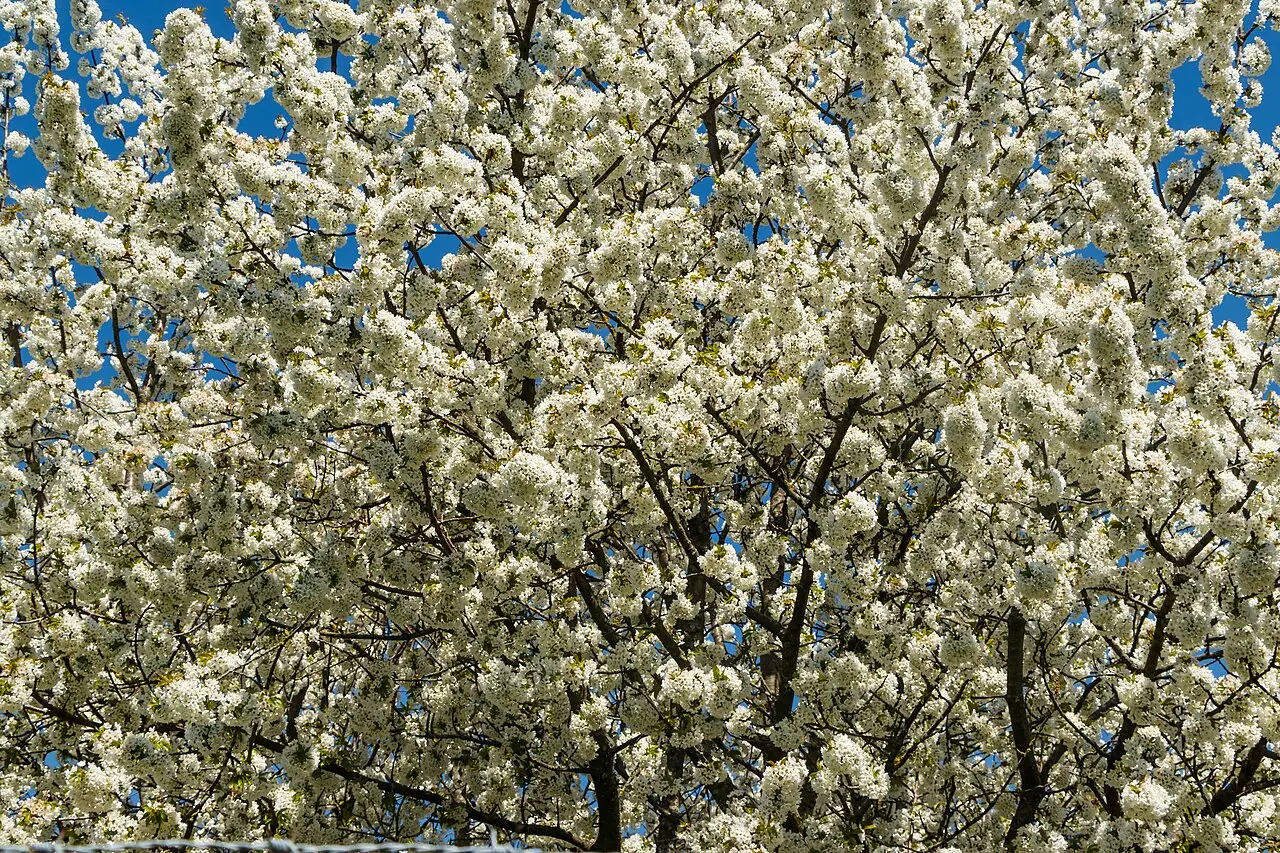
Stone fruit trees — cherries, plums, peaches, and related ornamentals — are prime candidates for late-spring pruning. Summer pruning carries lower disease risk than winter pruning: WSU Extension’s late-winter and early-spring gardening guidance notes that bacterial canker infects trees most readily through dormant-season wounds. Cuts made late May through mid-July close faster and are less hospitable to the pathogen.
Magnolias: prune immediately after bloom — next year’s flower buds set on the current season’s new growth. Homeowners who missed the peak window still have a short opportunity for light corrective cuts in late May. For concurrent scale pressure on magnolias, the scale insects on magnolia and holly guide covers the crawler-stage treatment window.
Pacific Arboriculture’s tree pruning and trimming services cover structural pruning, crown thinning, and deadwood removal throughout the service area, including Puyallup, Sumner, Covington, and Maple Valley.
Prune in summer (July–August): maples, birches, walnuts, dogwoods — the “bleeders”
Maples, birches, walnuts, and dogwoods ooze sap from cuts made while spring root pressure is high. Swanson’s Nursery’s PNW pruning calendar places these bleeders in the July–August window: by midsummer, root pressure has dropped enough that cuts close cleanly with adequate growing season remaining before fall.
Japanese maples are frequently mishandled — pruning in late May, when the tree is actively pushing tender new growth, stresses it at its most vulnerable point. For structural work, full winter dormancy in January or February is better. The aphid guide for Pacific Northwest maples and the Verticillium wilt guide explain how existing disease loads compound pruning risk.
Birches require similar patience. Spring pruning can compound bronze borer pressure — the bronze birch borer guide for western Washington explains how freshly wounded birch tissue attracts borer adults during peak flight. Delaying pruning to July reduces that exposure.
Wait until winter dormancy: oaks, elms, and large structural cuts
Oak wilt is the controlling risk for oaks. The USDA Forest Service oak wilt resource documents how fresh pruning cuts attract nitidulid sap-feeding beetles that vector the Bretziella fagacearum fungus — capable of killing a red oak in a single season and spreading through root grafts to neighboring trees. The safe pruning window is November through February. Homeowners with oaks in Federal Way, Renton, or Kent should schedule an arborist consultation now but defer all cuts to dormancy.
Dutch elm disease follows the same logic — elm bark beetles vectoring Ophiostoma fungi are active throughout the growing season, making April–October elm pruning a disease risk. Large structural cuts on most deciduous trees are also best reserved for dormancy.
Light pruning OK most of the year: arborvitae, juniper, and holly
Arborvitae and juniper tolerate light tip pruning from spring through early fall, with one hard rule: never cut back into bare, brown wood. Both species have limited capacity to regenerate from old wood, and shearing to bare stems leaves permanent brown patches — take only the current season’s new growth. Holly tolerates shaping in late spring after new growth hardens; coordinating with the scale crawler treatment window improves outcomes when scale is present. Plant healthcare monitoring confirms the plant is not already under stress before any cuts are made.
Pruning timing and pest pressure — why May–July cuts on Doug fir attract bark beetles
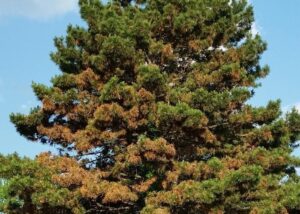
The PNW Pest Management Handbook entry on Douglas fir bark beetles documents that adult beetles are active approximately April through August and are attracted to fresh resin from pruning wounds. Recommended windows: late summer (August–September, after adult flight winds down) or late winter (February–March, before flight begins). Dead wood should be removed promptly regardless of season, but live-wood structural pruning is best scheduled outside May–July. Pacific Arboriculture integrates plant healthcare assessment into pruning consultations — pitch tubes, frass, or flagging branches change both the pruning plan and treatment calendar.
The cuts homeowners should never make themselves
The DIY pruning boundary: cuts under two inches in diameter, below shoulder height, with both feet on the ground — all three conditions simultaneously. Common overreach scenarios:
- Topping: Removing the central leader triggers vigorous, weakly attached water-sprout growth and creates large wounds that rarely compartmentalize properly. The ISA’s find-a-certified-arborist tool can locate qualified professionals for proper crown reduction.
- Ladder work near structures: Any contractor hired for elevated work should be verified through WA L&I contractor verification for active workers’ compensation and liability coverage.
- Large-diameter cuts on co-dominant stems: Removing a large limb from a leaning tree or a stem with included bark without understanding load dynamics can cause the remaining structure to fail immediately. TRAQ qualification is designed to identify these scenarios before work begins.
When to call an ISA Certified Arborist
The ISA’s certification database distinguishes ISA Certified Arborists — a comprehensive credential covering tree biology, diagnosis, pruning, and risk — from TRAQ-qualified arborists with additional systematic risk-assessment training. For pruning above ten feet, on structurally compromised trees, or anywhere a failure would threaten a structure or person, TRAQ qualification matters.
Pacific Arboriculture provides formal arborist reports and consultations for permit applications, neighbor tree disputes, property transactions, and post-storm evaluations — all following ISA Best Management Practices standards. Homeowners in Kent, Auburn, Renton, Tacoma, and Puyallup should confirm that any arborist contacted holds a current ISA certification and carries valid WA L&I workers’ compensation and liability coverage.
Frequently asked questions
Is it too late to prune my Japanese maple in May?
For most situations, yes. The tree is actively pushing tender new growth; pruning now stresses it at its most vulnerable point. Wait until July through early August; for structural work, full winter dormancy in January or February is the cleaner option.
Can I prune my cherry tree right now?
Yes — late May to mid-July is the preferred window for cherry and other stone fruit in the Pacific Northwest. As WSU Extension guidance notes, bacterial canker is less active during the growing season, so cuts made now close faster and face lower infection risk. Make cuts clean at the branch collar — no stubs.
Will pruning my birch in May hurt it?
A May cut on birch will bleed but is not lethal to an otherwise healthy tree. Wait until July: sap flow subsides, wounds close cleaner, and bronze birch borer adults are past peak flight by midsummer.
Why shouldn’t I prune my oak between April and October?
Fresh cuts attract sap-feeding beetles that carry oak wilt fungus. According to the USDA Forest Service, oak wilt can kill a red oak within a single season and spreads through root grafts. Safe pruning window: November through February.
How big a cut can I make myself?
Under two inches in diameter, below shoulder height, with both feet on the ground — all three simultaneously. Anything involving a ladder, chainsaw, limbs over structures, or stems with structural defects is arborist work, both for personal safety and for correct cut placement at the branch collar.
Pacific Arboriculture is an ISA Certified Arborist tree service serving the South Sound with TRAQ-qualified arborists for risk pruning. Tree pruning and trimming pages for Auburn, Kent, and Federal Way include location-specific scheduling and contact details. Service area includes Tacoma, Renton, Puyallup, Covington, and Maple Valley. For any pruning question involving tree size, species uncertainty, or structural concerns, an arborist consultation is the right first step before any cuts are made.