Spring leaf-out brings every Pacific Northwest maple tree to full canopy, and within a few weeks of those tender new leaves opening, a familiar problem starts showing up under driveways, patios, and parked cars: a fine sticky mist that turns sidewalks tacky, smears car windshields, and grows a black film on outdoor furniture. That sticky stuff is honeydew, and it is the calling card of aphids feeding in the maple tree above.
Aphids are one of the most common pest complaints homeowners in Auburn, Kent, Federal Way, Renton, Tacoma, and Puyallup bring to Pacific Arboriculture each May and June. The good news is that healthy mature maples almost always survive an aphid season without lasting damage. The bad news is that the mess they leave behind can be overwhelming, and the wrong response can make the problem worse for years. This guide explains what is happening, how to identify the cause, what works (and what does not), and when to bring in an ISA Certified Arborist for plant healthcare support.
What Are Aphids and Why Do They Love Maple Trees?
Aphids are soft-bodied, pear-shaped insects roughly the size of a pinhead. They cluster on the undersides of leaves and on tender new shoots, where they pierce the plant tissue and feed on the sugary phloem sap moving through the tree. Several species attack maples in western Washington — the most common include the boxelder aphid, the Norway maple aphid (Periphyllus lyropictus), and the painted maple aphid. They overwinter as eggs tucked into bark crevices and bud scales, then hatch in early spring as the leaves expand.
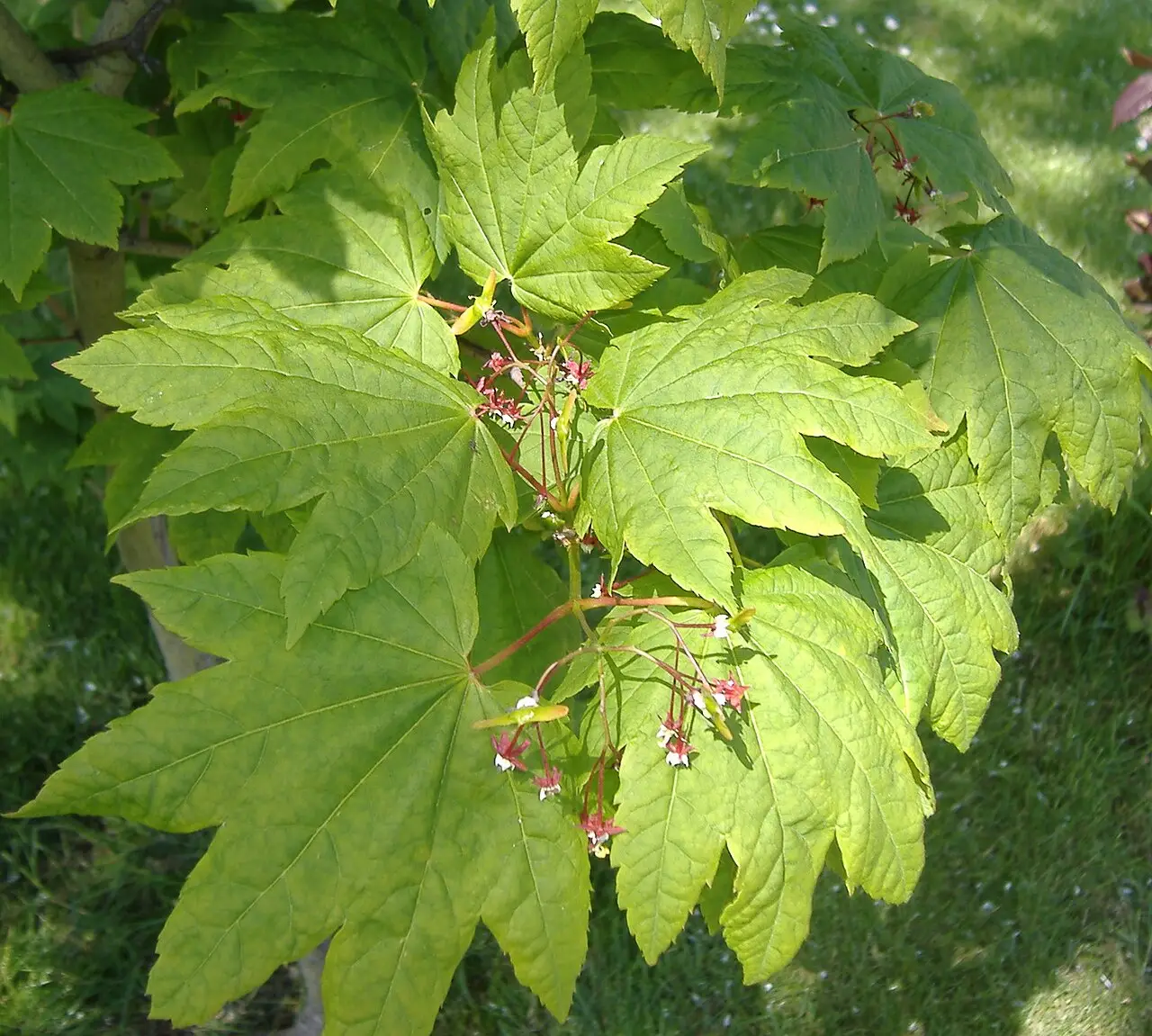
Maples are a preferred host for two reasons. First, maple leaves push out tender, thin tissue that aphid mouthparts can pierce easily. Second, maple sap runs sugar-rich, so the insects can take in plenty of carbohydrate while excreting the excess as honeydew. WSU Hortsense documents aphid pressure on maples as one of the most-reported pest issues in western Washington landscapes from late April through June.
WSU Hortsense: Trees and Shrubs — Aphids
How to Tell It Is Aphids and Not Something Else
Several maple problems look similar from a distance, so a quick three-step check helps confirm the cause before any treatment is chosen.
1. Look Underneath the Leaves
Pull a low branch toward the ground and turn a leaf over. Aphids cluster on the underside, often in dense colonies of green, yellow, brown, or pink insects depending on the species. Norway maple aphids tend to be pale green with dark stripes; boxelder aphids show a duller color. Move a finger across the underside — live aphids will feel slightly waxy and may leave a sticky residue.
2. Check for Honeydew Below the Tree
Honeydew is the most reliable sign. Pavement under an aphid-infested tree feels tacky underfoot. Cars parked beneath the canopy collect a fine sheen of droplets that resist a quick rinse. Within a few weeks, a black sooty mold begins growing on the honeydew, coating leaves, branches, patio stones, and any furniture left under the tree. Sooty mold itself is not a tree disease — it is a saprophytic fungus that lives only on the sugary excretion. Where there is sooty mold, there are (or recently were) sap-feeding insects above.
3. Watch for Wasps, Ants, and Yellowjackets
Honeydew attracts a parade of secondary visitors. Yellowjackets, paper wasps, ants, and flies all feed on the sugary residue. A maple that suddenly has wasps cruising the trunk in May is almost always hosting aphids overhead. Ants in particular will actively defend aphid colonies from natural predators because the colony is a reliable food source — a long line of ants marching up a maple trunk is a strong indicator.
If the leaves themselves are stippled, distorted, or showing fine silvery scarring, the cause is more likely spider mites or thrips — different problems with different treatments. Brown scorched margins on otherwise green leaves usually point to drought stress or salt burn, not insects. When the diagnosis is uncertain, an ISA Certified Arborist on-site assessment confirms the cause before any product is applied.
Will Aphids Kill the Maple Tree?
For an established, otherwise healthy maple, the answer is almost always no. Aphid populations boom and crash on a predictable cycle. Predators (lady beetles, lacewings, syrphid flies, parasitic wasps) build their numbers in response to the food supply, and within four to six weeks of peak infestation the colony usually collapses on its own. The tree responds by pushing a second flush of leaves and continues growing.
There are exceptions. Young trees with limited canopy reserves, recently transplanted maples, and trees already stressed by drought, root damage, or compacted soil tolerate sap loss less well. Repeated heavy infestations across multiple seasons can weaken a tree’s defenses against secondary pests — borers, cankers, and root pathogens — that do cause structural decline. The Pacific Northwest’s mild, wet springs sometimes support unusually persistent aphid pressure, particularly when winter cold snaps fail to knock back overwintering eggs. WSU Hortsense’s maple aphid fact sheet notes that aphid feeding produces heavy honeydew and can cause minor to severe leaf loss, especially on silver and Norway maples.
What to Do (And What Not to Do) This Spring
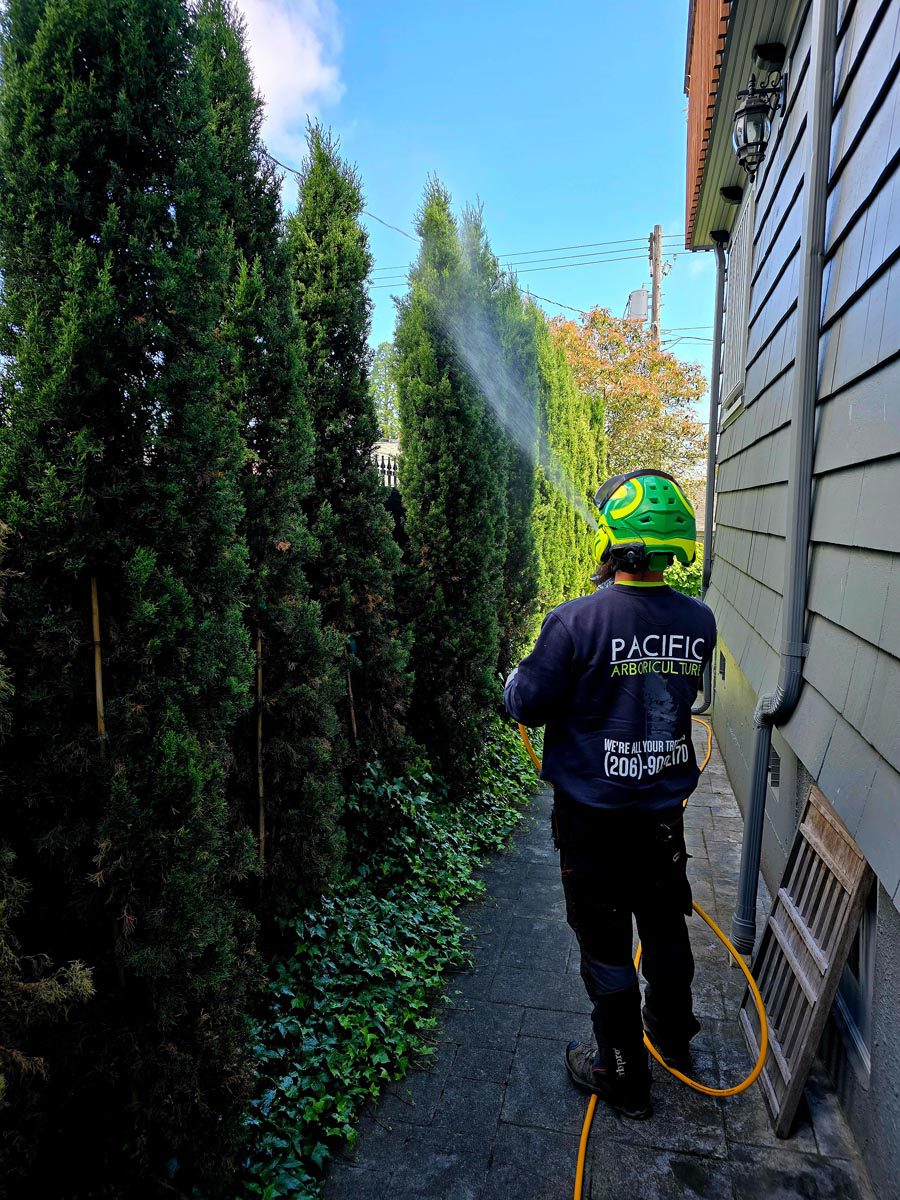
A staged approach matched to the size of the tree and the severity of the problem produces the best result for homeowners across Sumner, Bonney Lake, Maple Valley, and Covington.
Start With a Strong Water Spray
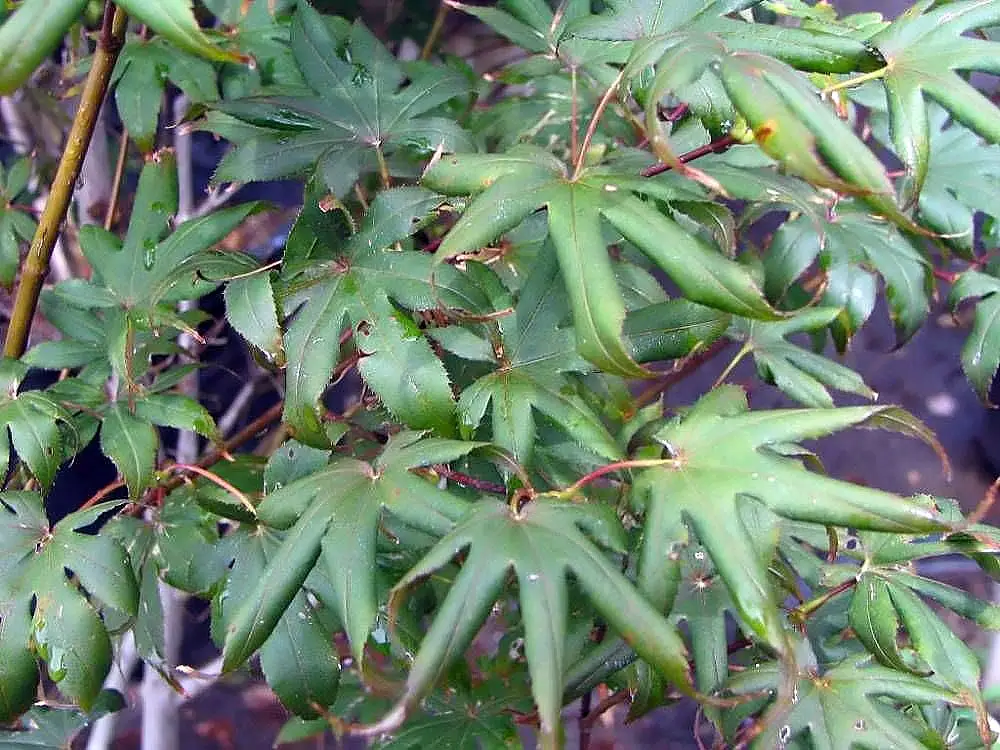
For a small ornamental maple — a young Bloodgood, Coral Bark, or Crimson Queen Japanese Maple within reach of a garden hose — a sharp jet of plain water aimed at the underside of the leaves dislodges most of the colony. Aphids that fall to the ground rarely climb back up. Repeating the rinse every three to five days during peak season keeps the population suppressed without affecting predators or pollinators. The Bloodgood Japanese Maple aftercare guide covers watering schedules and seasonal care for this group.
Encourage Natural Predators
Lady beetle larvae, lacewing larvae, and syrphid (hover fly) larvae are the most effective aphid predators in western Washington. They show up on their own as the prey base grows. The fastest way to drive them away is a broad-spectrum insecticide spray. Property owners who reach for a contact insecticide at the first sign of aphids almost always end up with a worse infestation two weeks later because the predators have been wiped out and the surviving aphids reproduce parthenogenetically (every female is born pregnant). Patience usually beats action in the first two weeks.
Wash Cars and Patios Promptly
Honeydew and the sooty mold that follows can etch automotive clearcoat and stain concrete if left for weeks. A regular rinse with mild soap and water, applied within a few days of deposit, prevents permanent damage. Move cars off driveways under aphid-affected trees during the four-to-six-week peak. Patio furniture left under a sticky maple may need a deeper clean — an oxygen-bleach solution removes sooty mold from concrete and stone without damaging plants. King County environmental health publishes guidance on low-toxicity exterior cleaning products.
Skip the Soap-and-Water DIY Sprays on Large Maples
Contact soap sprays do kill aphids and are widely recommended on small trees. On a 30-foot mature maple, however, homeowner spray equipment cannot reach the upper canopy where most of the colony lives. The result is a partial kill in the lower branches, no impact above, and a stripe of dead lower-canopy leaves with no real reduction in honeydew. Mature trees benefit far more from professional plant healthcare equipment that can deliver coverage to the entire crown.
When Plant Healthcare Treatment Makes Sense
Pacific Arboriculture’s plant healthcare program treats aphids when one or more of these conditions apply:
The Tree Is Stressed Already
A maple recovering from drought, recent transplant, root pruning during construction, or compacted soil from foot traffic has fewer reserves to rebuild a damaged canopy. Knocking down the aphid population reduces stress and lets the tree recover.
The Tree Overhangs Heavy Use Areas
Driveways, decks, patios, outdoor dining spaces, pools, and play structures under a heavily infested maple become unusable for weeks. For homeowners in Edgewood, Lake Tapps, Fife, Pacific, and Tukwila who built outdoor living spaces around an existing maple, a single treatment timed correctly preserves the use of the space.
The Same Tree Gets Hit Year After Year
A few maples in any neighborhood become reliable annual hosts. Once a tree shows three or more consecutive seasons of heavy aphid pressure, a preventative treatment program is more cost-effective than reactive cleanup. Pacific Arboriculture’s tree health management service uses tree-specific timing and product selection to break the cycle.
Treatment Options the Plant Healthcare Program Uses
Three approaches work for mature maples in the south Puget Sound. Foliar sprays applied early in the season with high-volume equipment smother eggs and small nymphs without leaving systemic residue. Trunk-injected systemic treatments deliver active ingredient through the tree’s vascular system to reach pests in the upper canopy without any drift; injections are timed to avoid bloom periods to protect pollinators. Soil-applied systemics, used selectively, can provide season-long protection on chronic-infestation trees. The right choice depends on tree size, surrounding plantings, pollinator activity, and the intensity of past infestations — an ISA Certified Arborist consultation determines which approach fits the property.
OSU Extension: Aphids on Trees and Shrubs
Long-Term Maple Health: Stronger Trees Get Fewer Aphids

Insects always concentrate on the weakest available host. The most effective long-term aphid strategy is the one that keeps a maple’s vigor high so infestations stay short and mild.
Mulch and Watering
A 3–4 inch ring of arborist wood-chip mulch out to the dripline (kept off the trunk flare) moderates soil temperature, holds moisture, and suppresses turfgrass competition. During the dry months that have become the western Washington new normal, deep watering once every 7–10 days during June through September is the single biggest investment a homeowner can make in tree health. Pacific Arboriculture’s after care guide library covers watering, mulching, and seasonal care across maple, conifer, deciduous, and fruit-tree categories.
Avoid Nitrogen Bombs
Heavy nitrogen fertilization (lawn fertilizer drifting onto tree roots, or repeated applications of synthetic 21-0-0 directly to a tree) drives a flush of soft, succulent new growth. That growth is exactly what aphids prefer. A balanced slow-release fertilizer applied once in early spring, or a soil-test-guided micronutrient program, supports growth without supercharging aphid food.
Prune for Air and Light
Dense, congested canopies hold humidity and shelter the colonies that deposit honeydew on the canopy below. Selective thinning by an ISA Certified Arborist — never topping or lion-tailing — opens the crown so leaves dry quickly after rain and predators can move freely through the branches. The late-spring pruning guide explains what is safe to prune in May and June and what should wait until dormant season.
Soil and Root Health
Compaction, soil pH out of range for the species, or buried root flares all weaken a maple. An arborist evaluation of root-zone conditions — sometimes paired with vertical mulching or radial trenching — addresses the underlying problem. This article on tree injections covers how soil and trunk treatments compare for chronic pest issues.
What This Looks Like Across the Service Area
Pacific Arboriculture sees aphid calls follow a predictable seasonal arc across Auburn, Kent, Renton, Federal Way, Tacoma, Puyallup, Sumner, Burien, SeaTac, Des Moines, Tukwila, Pacific, Edgewood, Fife, Lake Tapps, Maple Valley, Covington, Bonney Lake, Fairwood, and Normandy Park. Calls start in late April from properties with Norway maples and other early-leaf species. Volume peaks the second and third weeks of May as Japanese maples, big-leaf maples, and red maples reach full canopy. Calls taper through June as predator populations catch up, then drop sharply by early July.
A small share of trees — usually older Norway maples in front-yard locations with extensive lawn fertilization and reflected heat from pavement — show severe, repeating infestations year after year. These benefit most from a multi-year plant healthcare relationship rather than one-off spring treatments.
Frequently Asked Questions
Is the sticky stuff that lands on cars under a maple tree harmful to the paint?
Honeydew itself is mostly water and sugar and is not corrosive in the short term. However, the sooty mold that grows on it is acidic and the prolonged moist contact can dull and etch automotive clearcoat after a few weeks. Rinse cars within a few days of deposit and consider relocating off the driveway during the May–June peak.
Do homeowners need to spray every spring to keep aphids away?
No. Most healthy maples handle aphid pressure on their own as natural predators catch up. Reactive treatment is only worthwhile when the tree is stressed, the canopy overhangs heavy-use areas, or the same tree has shown several consecutive years of severe infestation. Routine annual spraying often makes the problem worse by removing predators.
Will aphids spread to other trees in the yard?
Aphid species tend to be host-specific. The Norway maple aphid stays on Norway maples. Boxelder aphids stay on boxelder. They will not jump from a maple to a fruit tree, oak, or conifer. However, multiple maple species in the same yard can each have their own aphid issue at the same time.
Can aphids be treated organically?
Yes. Plain-water spray and low-impact contact treatments are compatible with most organic landscape programs. Pacific Arboriculture’s plant healthcare program offers organic-only treatment plans on request, though larger trees may still require professional equipment to reach the upper canopy.
How does Pacific Arboriculture decide whether to treat?
An ISA Certified Arborist visits the property, identifies the species of aphid and the size of the colony, evaluates overall tree vigor, looks at site conditions and surrounding plantings, and discusses how the homeowner uses the space below. The treatment plan — or a recommendation to wait and let predators catch up — comes from that assessment.
When to Bring in an ISA Certified Arborist
Most aphid seasons resolve on their own. Property owners across the south Puget Sound should consider professional plant healthcare support when the tree is young or recently transplanted, when honeydew is making outdoor spaces unusable, when the same tree shows three or more consecutive heavy-infestation seasons, when systemic treatment is being considered (these products require licensed application), or when other symptoms suggest a deeper problem — wilting, branch dieback, fungal conks, or unexplained leaf drop in mid-summer.
Pacific Arboriculture provides ISA Certified Arborist consultations, plant healthcare treatments, structural pruning, soil-and-root work, and arborist reports for residential and commercial properties across Auburn, Kent, Federal Way, Renton, Tacoma, Puyallup, Sumner, Bonney Lake, Lake Tapps, Maple Valley, Covington, Fife, Pacific, Edgewood, Burien, SeaTac, Des Moines, Tukwila, Fairwood, and Normandy Park. To schedule an on-site evaluation, request a quote through the free quote form or call (206) 909-2170.