
Federal forecasters placed the entire state at above-average wildfire potential through September, and that outlook includes the western lowlands, not just the dry country east of the Cascades. Most defensible-space advice focuses on clearing brush. Species selection gets skipped almost every time. Yet the tree planted this fall largely determines how a property behaves in a fire twenty years from now. Homeowners in Puyallup, SeaTac, and Tukwila planning new trees have a real decision to make.
Central Pierce Fire & Rescue: Wildfire Awareness & Defensible Space
No Tree Is Fireproof, But Some Resist Ignition
Start with the honest version: every tree burns at a high enough temperature. Fire-resistant is not fire-proof. What separates a lower-risk tree from a high-risk one is how easily it ignites and how much fuel it hands the fire once it does. WSU Extension in Pierce County identifies six traits that make a plant fire-resistant: high leaf moisture, which slows ignition; minimal dead or dry material in the canopy; open branching rather than dense; low overall plant density; slow growth, so less dead wood accumulates; and non-resinous wood and foliage, free of the pitch that makes some species ignite explosively.
WSU Extension Pierce County: Fire Wise Tip Sheet
The Broadleaf Trees That Top the Puget Sound Firewise List
King County publishes a Firewise plant list built specifically for the Puget Sound Basin, which beats generic western wildfire guidance. Broadleaf deciduous trees dominate the fire-resistant side of it. The trees named include maple (Acer), alder (Alnus), birch (Betula), flowering dogwood (Cornus), Oregon ash (Fraxinus latifolia), crabapple (Malus), cottonwood and aspen (Populus), cherry (Prunus), oak (Quercus), and willow (Salix). Every one of them is deciduous, non-resinous, and holds relatively high leaf moisture through the growing season.
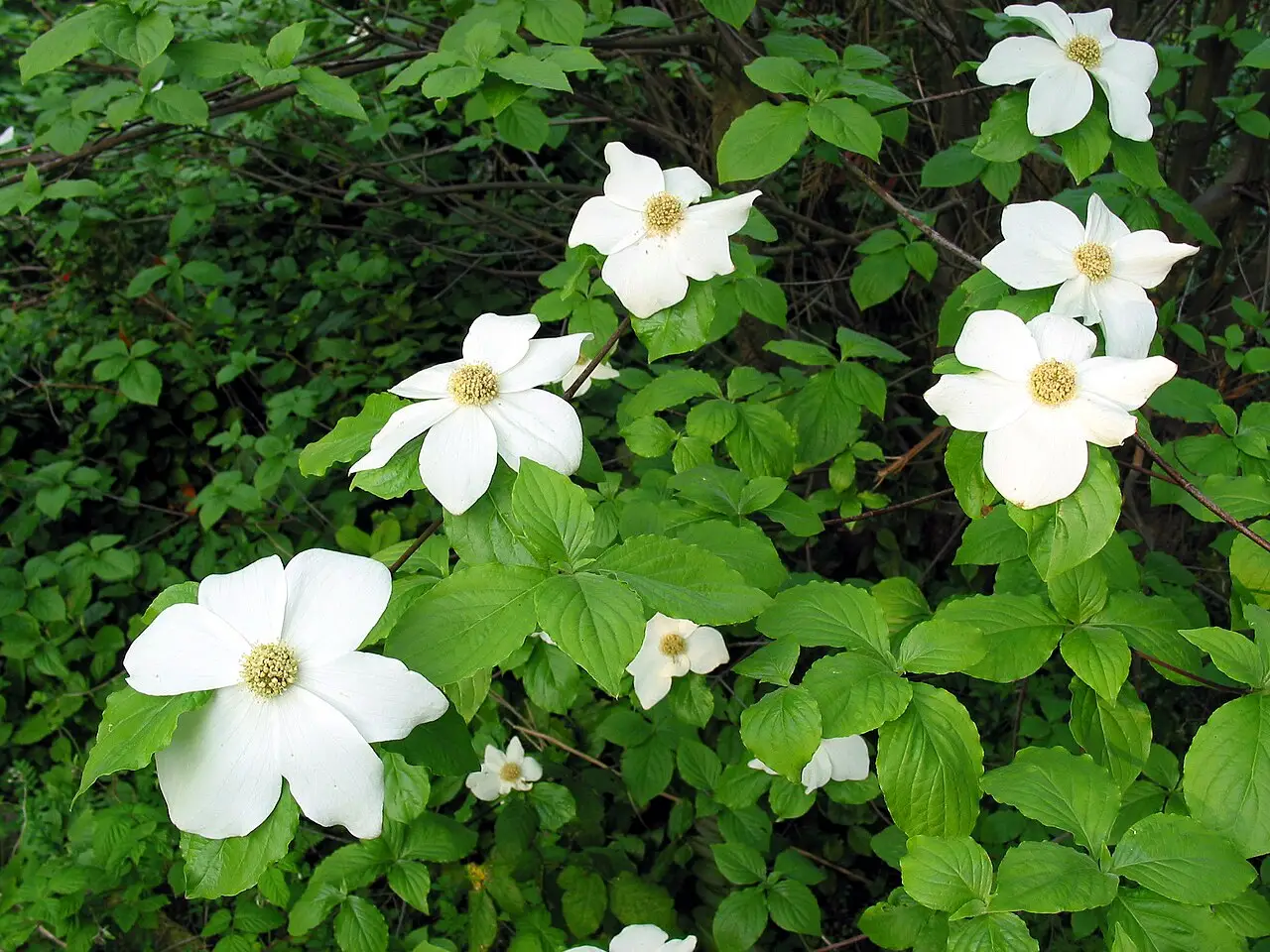
That list is workable here. Native Pacific dogwood, vine maple, red alder, and Oregon white oak all appear on it, and all four already suit local soils and rainfall. Anyone still deciding what belongs on a property can review the best trees to plant in Washington state, or start by identifying the native species already on the lot.
King County: Firewise Plants for the Puget Sound Basin
Cedar, Pine, Spruce, Fir, and Arborvitae Behave Differently
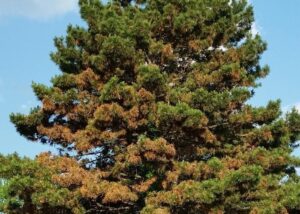
Resinous conifers sit at the other end of the scale. King County notes that cedar, spruce, and pine can increase both fire intensity and the rate at which fire spreads. WSU Extension goes further and lists juniper, pine, spruce, fir, and arborvitae as highly flammable species to avoid in a fire-wise landscape.

Arborvitae deserves its own warning. Washington DNR makes the point plainly: all vegetation burns at high enough temperatures, but some plants are far more likely to ignite and carry fire. A row of arborvitae planted tight against a house is a continuous fuel bed with years of dead interior foliage trapped inside. Property owners replacing one have better options in privacy trees that suit South Sound conditions.
None of this means every cedar or Douglas fir should come down. A mature Douglas fir with a crown base thirty feet up and no ladder fuel beneath it is a very different proposition than dense young resinous growth crowding a wall. King County frames retained conifers within thirty feet of a home as a placement, spacing, and pruning problem, not an automatic removal.
Washington DNR: Arborvitae or Juniper? It Doesn’t Matter
Placement Beats Species Almost Every Time
Defensible space planning divides a property into three zones: the immediate zone at zero to five feet from structures, the intermediate zone at five to thirty feet, and the extended zone from thirty to one hundred feet. Species tolerance loosens as distance from the building increases.
The other half is vertical. Ladder fuels are the low branches and understory growth that let a ground fire climb into a canopy, and removing lower limbs breaks that ladder. That work falls under structural pruning and crown raising, and on an established property in Auburn or Sumner it matters more than any planting decision made this year. A hazard tree assessment ahead of fire and storm season is the practical starting point.
WSU Extension: Fire-Resistant Landscaping for the Home and Community
Planting a Fire-Smarter Yard This Fall
Fall is the right window for new trees in the South Sound. Soil stays warm, rain returns, and roots establish through winter instead of fighting for water in August. That matters twice over, because a drought-stressed tree loses leaf moisture and ignites more easily.

Three habits carry most of the benefit. Space new trees so mature canopies will not touch, which keeps fire from moving crown to crown. Keep resinous species out of the first thirty feet and put broadleaf deciduous trees there instead. Then water deeply and infrequently through the first several summers so leaf moisture stays high. Broader guidance on sustainable tree planting for Western Washington covers site prep and species matching.
Species selection on a fire-exposed property is a judgment call about soil, exposure, structure distance, and what already grows nearby. Pacific Arboriculture handles that through arborist reports and consultations, then follows with professional tree installation. An ISA Certified Arborist walking the property will spot the ladder fuels and spacing problems a plant list cannot.
Frequently Asked Questions
Which trees are the most fire-resistant choice for a Western Washington yard?
Broadleaf deciduous species lead the Puget Sound Firewise list: maple, alder, birch, dogwood, Oregon ash, crabapple, cherry, oak, aspen, and willow. All are non-resinous and hold higher leaf moisture than conifers. Native Pacific dogwood, vine maple, and Oregon white oak combine that resistance with proven local adaptation.
Should an established western red cedar be removed for wildfire safety?
Not automatically. Distance from the structure, height of the crown base, and the presence of ladder fuel underneath matter far more than species alone. King County treats conifers retained within thirty feet of a home as a spacing and pruning question. An arborist assessment settles it far better than a blanket rule.
Is arborvitae a fire hazard next to a house?
Yes. WSU Extension lists arborvitae among the highly flammable species to avoid, and Washington DNR notes that dense screens carry fire readily. Years of dead interior foliage build up inside a mature arborvitae screen. Keeping arborvitae out of the first thirty feet around a structure is the safer approach.
When is the best time to plant fire-resistant trees in the South Sound?
October through November is ideal. Cool soil and returning rainfall let roots establish over winter, so the tree faces its first summer drought already anchored. Spring planting works too, but it demands consistent deep watering through the first dry season to keep the tree from stressing.