Hedges and Privacy Trees in Western Washington: Aftercare Guide
Hedges and Privacy Trees in Western Washington: Year-Round Screening
Privacy plantings are one of the most-requested installations across the south Puget Sound. Whether the goal is screening a neighbor’s two-story addition, blocking road noise on a Federal Way arterial, or replacing an aging fence with living screening in Auburn or Kent, the right hedge or privacy tree species delivers year-round visual block and noise reduction that hardscape cannot match. The wrong species — installed incorrectly or maintained poorly — turns into a lifelong frustration.
This category covers the hedge and privacy tree species Pacific Arboriculture installs and maintains most often, with links to species-specific aftercare guides as each is published.
What Makes a Good Privacy Tree in the PNW
The south Puget Sound has demanding conditions for privacy plantings: cool wet winters, increasingly dry summers, heavy clay soils, and tight property setbacks. The species that succeed share several traits:
- Dense, year-round foliage from ground level up to the screening height needed (usually 8 to 25 feet for residential applications).
- Reasonable mature size — fast-growing species are tempting, but a 60-foot mature tree planted 6 feet from the property line creates problems within a decade.
- Tolerance for clay soil and seasonal saturation — many imported privacy species fail in winter-wet PNW soils.
- Manageable insect and disease pressure — Leyland cypress, for example, has known pressure from seiridium canker that has disqualified it from many PNW plantings.
- Compatible mature root architecture — privacy plantings near foundations, septic systems, or sewer laterals need species with predictable root behavior.
Privacy Tree Aftercare: Establishment Period
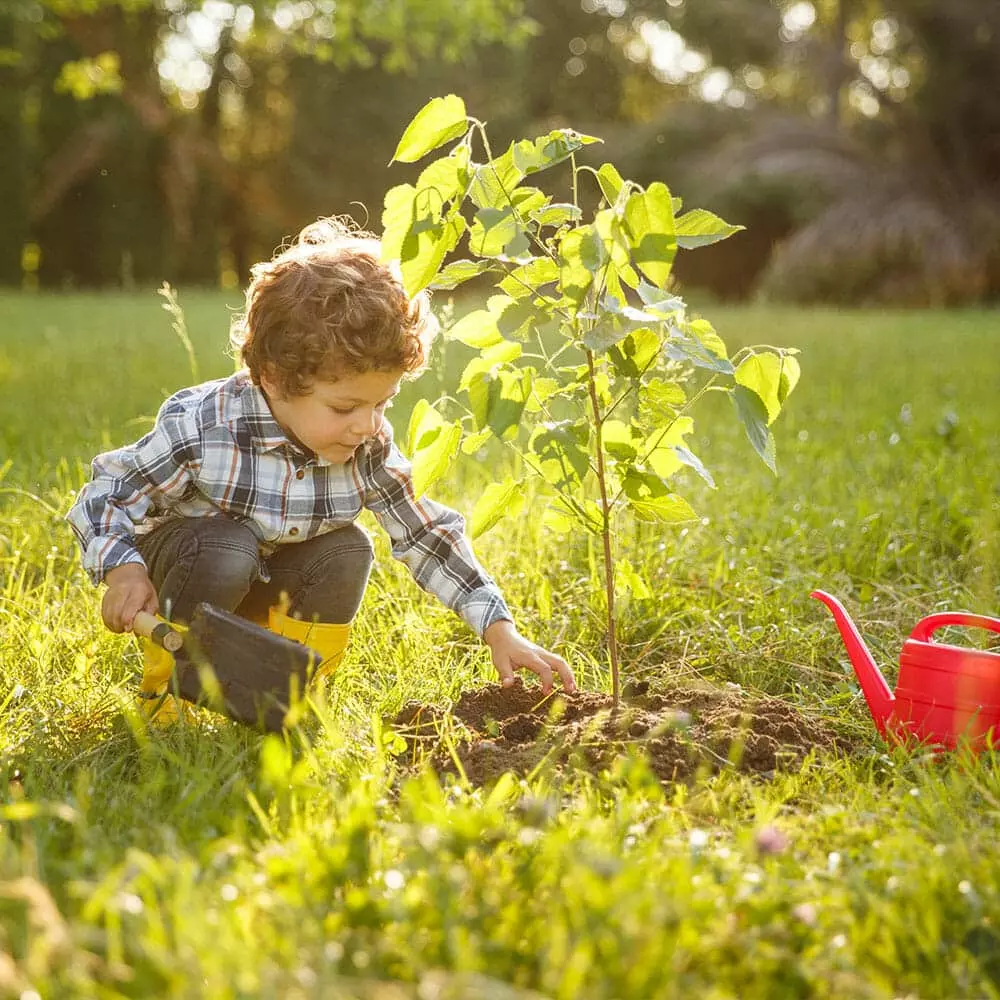
- Water deeply through year three. Privacy hedges are usually planted in tight rows, and competition for soil moisture is significant. Plan on deep slow watering through the dry season for at least three growing seasons. Drip irrigation along the row is the most efficient delivery method.
- Mulch the entire row, not individual trees. A continuous 2- to 3-inch arborist wood chip mulch strip along the entire hedge line suppresses competing vegetation and conserves moisture. Pull mulch back 2 to 3 inches from each trunk.
- Wait to shape the hedge until it has reached screening height. Pruning a young hedge for shape before it reaches mature height slows establishment significantly. Allow vertical growth, then begin shaping.
- Watch for root competition. Privacy plantings near established trees, lawn, or perennial beds compete for water. The hedge will lose every time. Maintain a minimum 4-foot turf-free zone along the hedge.
- Replace failed individuals quickly. One dead tree in a 20-tree hedge becomes a permanent gap if not replaced within the first two years. After that, a replacement tree will not catch up to the established hedge mass.
Pruning Hedges: Frequency and Technique
Hedge maintenance pruning differs from structural tree pruning. The goal is dense, predictable form rather than open canopy structure. General guidelines for the south Puget Sound:
- Annual or twice-yearly shearing for formal hedges (arborvitae, boxwood, yew). Late spring after the first growth flush, with an optional second pass in late summer.
- Always taper top narrower than base. A “battered” hedge — wider at the base than the top — keeps lower foliage in sunlight and prevents the bottom from thinning out. This is the single most common hedge maintenance mistake in residential plantings.
- Avoid winter shearing. Wet winter conditions promote fungal infection on cut surfaces.
- Renovation pruning. Some hedge species (yew, Skip laurel) can be cut back hard and will regenerate. Others (arborvitae, Leyland cypress) will not regenerate from old wood — once the inner foliage is gone, it does not come back.
Common Privacy Tree Issues in the PNW
- Cedar/arborvitae browning — usually drought stress in the first three years; sometimes spider mite damage in mature plantings.
- Seiridium canker on Leyland cypress — well-documented in the PNW; pressure has reduced Leyland’s reliability as a long-term privacy choice.
- Boxwood blight — present in the region; affects English and American boxwood. Resistant cultivars and Hicks yew are reasonable alternatives.
- Voles and rodents — chew bark at the base of young hedge trees in winter; trunk wraps and a clear mulch zone reduce risk.
- Wind throw on tall narrow privacy trees — Italian cypress and similar columnar species can topple in saturated soil; siting matters.
- Fence-line root conflicts — roots from large privacy trees can lift fence posts; species selection and setback distance are the main controls.
Species in This Category
The species pages below cover the most-commonly installed and serviced trees in this category — each with planting, watering, fertilizing, and pruning guidance plus a quick-reference spec panel.
- English Laurel (Prunus laurocerasus) — planting, watering, fertilizing, and pruning notes for the south Puget Sound.
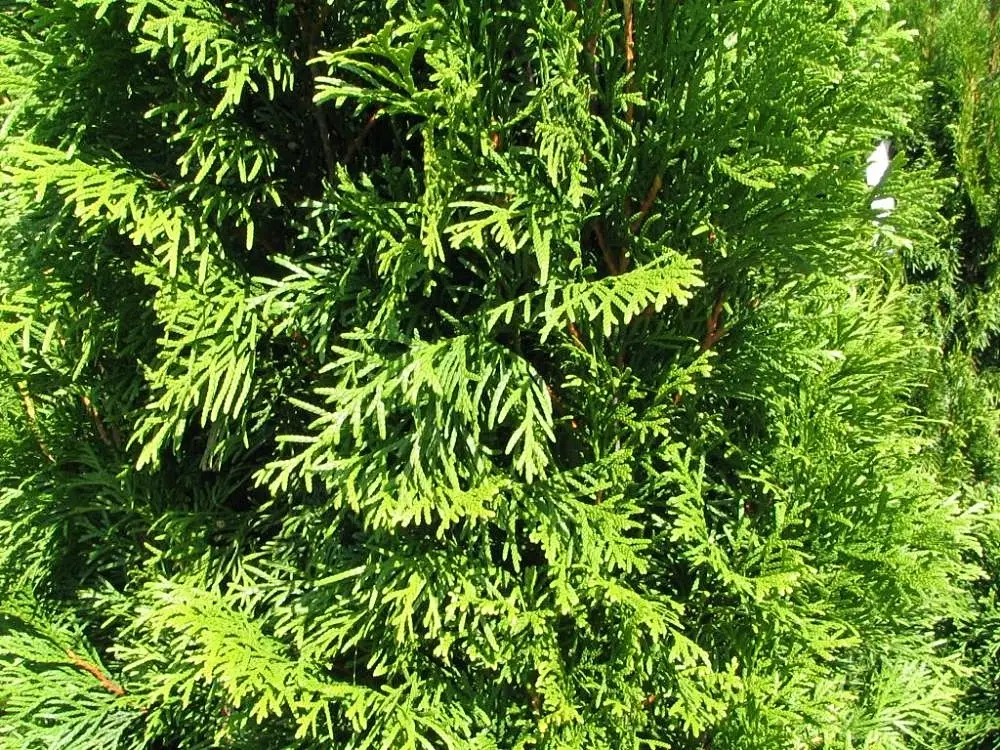
- Arborvitae (Thuja occidentalis & Thuja plicata cultivars) — planting, watering, fertilizing, and pruning notes for the south Puget Sound.
- Juniper (Juniperus species & cultivars) — planting, watering, fertilizing, and pruning notes for the south Puget Sound.
- Italian Cypress (Cupressus sempervirens) — planting, watering, fertilizing, and pruning notes for the south Puget Sound.
When to Bring in an ISA Certified Arborist
Privacy plantings reward thoughtful species selection and disciplined first-three-year aftercare. Pacific Arboriculture’s ISA Certified Arborists handle privacy tree installation, hedge pruning, replacement of failed trees, and renovation pruning of mature hedges across Auburn, Kent, Tacoma, Federal Way, Renton, Puyallup, Sumner, Lake Tapps, Covington, and the broader south Puget Sound. For species selection guidance before installing a hedge, established-hedge maintenance, or replacement of failed sections, request a free quote or call (206) 909-2170.
Privacy Tree Aftercare FAQ
Q: How fast will arborvitae reach 8-foot screening height?
A: Emerald Green typically reaches 8 feet in 6 to 8 years from a 5-foot starter; Green Giant reaches 8 feet in 3 to 4 years. Faster establishment correlates directly with consistent first-three-year deep watering.
Q: My arborvitae hedge is browning from the inside out. What is happening?
A: Most often drought stress in years 1 through 3, or root competition with adjacent lawn or trees. Increase deep watering frequency and confirm mulch coverage extends past the drip line. Spider mite damage is a less common but possible cause and is diagnosed with a hand lens.
Q: Can a hedge that has been topped or sheared too tightly recover?
A: Yew and Skip laurel will regenerate from old wood and can be renovated. Arborvitae, Leyland cypress, and most conifers will not — once foliage is removed back to bare wood, it does not return. Renovation prospects depend on species.
Q: How far from a property line should a privacy tree be planted?
A: Setback depends on the mature width of the species. As a general rule, plant trees so the mature canopy edge stays at least 2 feet from the property line. Skip Laurel and Emerald Green tolerate 4-foot setbacks; Green Giant needs 8 feet or more.