Flowering Trees in Western Washington: Aftercare Guide
Flowering Trees in Western Washington: Seasonal Showpieces for South Puget Sound Landscapes
Flowering trees are the centerpieces of a residential landscape — Pacific dogwood in May, serviceberry in early spring, Stewartia in midsummer, flowering cherry in April. Each delivers a few weeks of standout bloom and the rest of the year contributes structure, fall color, and habitat. Across the south Puget Sound, well-sited flowering trees outperform almost every other landscape investment for visual return.
That said, flowering trees concentrate their ornamental value into a narrow seasonal window — and a stressed or poorly maintained tree often skips that window entirely. Aftercare matters.
This category covers aftercare for the flowering tree species Pacific Arboriculture installs and maintains most often across Auburn, Kent, Tacoma, Federal Way, Renton, Puyallup, and surrounding cities, with links to species-specific guides as each is published.
Why Flowering Trees Are Higher-Maintenance Than They Look
The bloom is the obvious payoff, but flowering trees concentrate energy into reproductive growth in ways that make them more sensitive than equivalent shade trees:
- Bloom set depends on the prior season’s energy reserves. A drought-stressed Pacific dogwood in August will bloom poorly the following May, even if conditions improve.
- Disease pressure tracks bloom timing. Cool wet springs that extend bloom also extend the window for fungal infection — anthracnose on dogwood, brown rot on flowering cherry.
- Pruning timing is unforgiving. Pruning at the wrong time removes next year’s flower buds entirely. Most flowering trees set buds the prior summer.
- Site sensitivity. Pacific dogwood and Stewartia want morning sun and afternoon shade in the south Puget Sound; full hot afternoon sun shortens their lives.
- Pollinator partnerships. Flowering trees feed native pollinators during gaps when conifers cannot. Pesticide timing and selection matter.
Flowering Tree Aftercare: Establishment to Mature Bloom
- Site for morning sun. Pacific dogwood, Stewartia, and serviceberry all prefer morning sun and afternoon shade or filtered light in the south Puget Sound. Trees in the wrong location are perpetually stressed and rarely reach their potential.
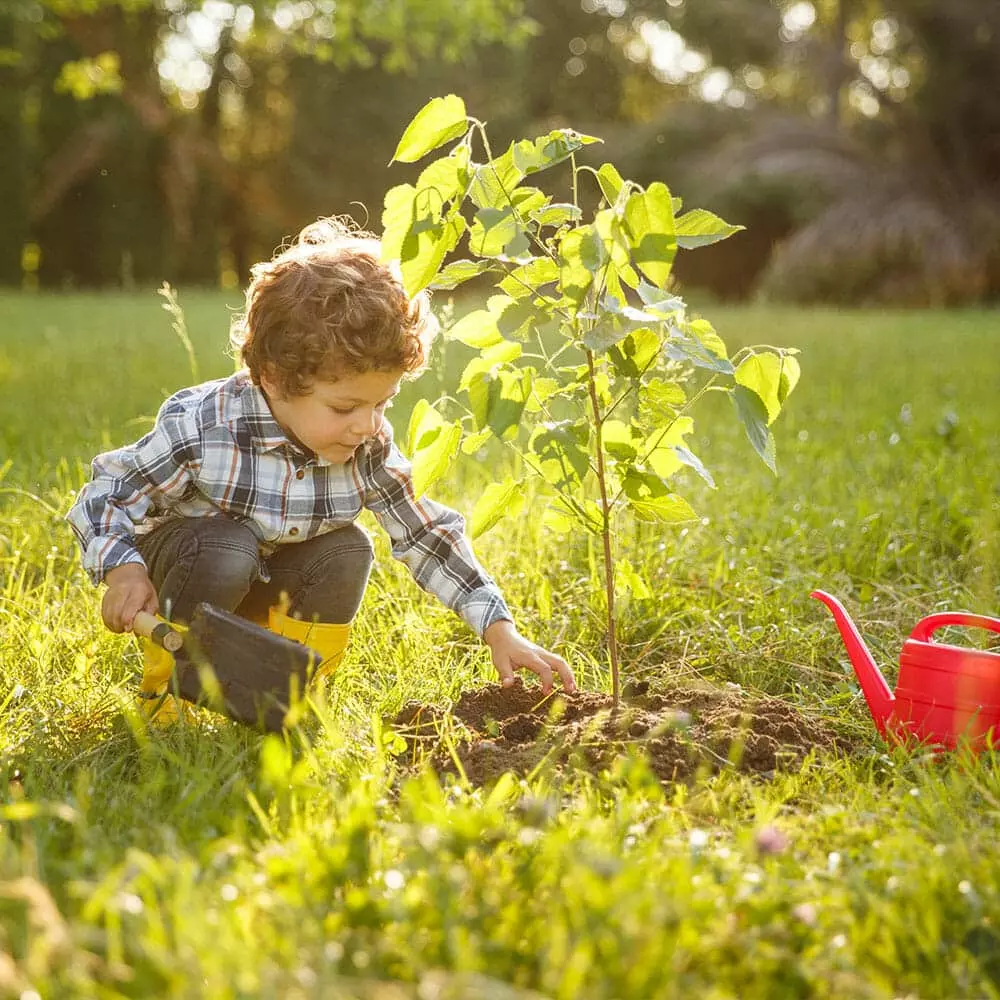
- Water consistently for the first three years. Flowering trees are particularly sensitive to drought stress during bud set (July through September). Deep watering once or twice per week through the dry season for at least three growing seasons.
- Mulch wide. 2 to 3 inches of arborist wood chips in a 4- to 6-foot ring, kept back 2 to 3 inches from the trunk. Mulch coverage extends past the drip line as the canopy grows.
- Fertilize lightly, if at all. Excessive nitrogen pushes vegetative growth at the expense of bloom. Slow-release organic amendments in spring of year two are appropriate for trees with weak growth or pale foliage.
- Monitor for early-season disease. Cool wet springs trigger anthracnose on dogwoods and brown rot on flowering cherry. Early detection and sanitation are the main controls.
Pruning Flowering Trees: Don’t Prune Off Next Year’s Bloom
The single most important rule for flowering tree pruning: most species set their flower buds during the prior summer. Pruning at the wrong time removes next year’s bloom entirely. General guidelines for the south Puget Sound:
- Spring-blooming flowering trees (dogwood, cherry, serviceberry): Prune immediately after bloom (May through June). The tree will set next year’s buds during the following summer.
- Summer-blooming flowering trees (Stewartia): Prune in late winter (February through early March) before the active growing season.
- Pacific Madrone: Prune as little as possible. Madrones are extremely wound-sensitive and respond poorly to even small pruning cuts.
- Avoid: Pruning during bloom (loss of current-year display) and pruning during prolonged wet stretches (fungal infection risk).
Industry pruning standards are published as ANSI A300 — see TCIA for technical references and UW Miller Library for region-specific botanical references.
Common Flowering Tree Issues in the PNW
- Dogwood anthracnose — fungal disease affecting Pacific dogwood and Eastern dogwood; native Pacific dogwood (Cornus nuttallii) is more susceptible than some Eastern cultivars.
- Brown rot on flowering cherry — fast-spreading fungal disease during wet bloom; sanitation and proper pruning are the main controls.
- Bacterial canker on flowering cherry and plum — oozing wounds on trunk and major limbs; pruning timing reduces incidence.
- Pacific Madrone decline — sudden dieback affecting madrones across the region; root rot, drought, and human disturbance all contribute. Madrones rarely recover once decline begins.
- Stewartia leaf scorch — drought stress signature; usually a watering or siting issue.
- Serviceberry rust — alternate host with juniper; mostly cosmetic.
- Fire blight on serviceberry and flowering pear — same bacterial disease that affects fruit trees; pruning out 12 inches below visible symptoms with sterilized tools.
Species in This Category
Individual species pages are being added; check back as each goes live.
- Pacific Dogwood (Cornus nuttallii) — coming soon
- Serviceberry (Amelanchier alnifolia) — coming soon
- Stewartia (Stewartia spp.) — coming soon
- Japanese Stewartia (Stewartia pseudocamellia) — coming soon
- Flowering Cherry (Prunus serrulata, P. × yedoensis) — coming soon
- Pacific Madrone (Arbutus menziesii) — coming soon
When to Bring in an ISA Certified Arborist
Flowering trees reward attentive aftercare and respond quickly to neglect. Pacific Arboriculture’s ISA Certified Arborists handle flowering tree installation, structural and post-bloom pruning, plant healthcare, and disease evaluation across Auburn, Kent, Tacoma, Federal Way, Renton, Puyallup, Sumner, Lake Tapps, Covington, and the broader south Puget Sound. For species selection, established-tree pruning, or PHC programs, request a free quote or call (206) 909-2170.
Flowering Tree Aftercare FAQ
Q: When should a flowering cherry be pruned in Auburn or Kent?
A: Immediately after bloom (May through early June). Pruning during the late-winter window common for other deciduous trees creates wet wounds that invite bacterial canker and silver leaf — both are serious pathogens for flowering cherry.
Q: Why does a Pacific dogwood have brown spots and curling leaves every spring?
A: Most likely dogwood anthracnose, especially in cool wet springs. Native Pacific dogwood is particularly susceptible. Sanitation (raking and removing infected leaves) and good air circulation reduce pressure; resistant cultivars are an option for new installations.
Q: A Pacific Madrone is suddenly dropping bark and branches. Can it be saved?
A: Madrone decline is widespread across the PNW and is triggered by a combination of root rot, drought stress, and soil disturbance. Once advanced decline begins, recovery is uncommon. An ISA Certified Arborist can evaluate the tree and confirm whether retention is realistic.
Q: Why did a flowering tree skip blooming this year?
A: Most often, the prior summer’s drought stress prevented flower bud set, or the tree was pruned at the wrong time and the buds were removed. Flowering trees need consistent water through bud set (July through September) and pruning timed correctly for the species.