Conifers in Western Washington: Aftercare Guide
Conifers in Western Washington: The Backbone of the PNW Canopy
Conifers — the cone-bearing evergreens that define the Pacific Northwest skyline — make up the majority of the mature canopy across the south Puget Sound. Western Redcedar, Douglas Fir, Western Hemlock, and Sitka Spruce are foundational species in Auburn, Kent, Renton, Tacoma, Federal Way, and the surrounding cities. Properties built in the 1970s and 1980s often have multiple 60- to 100-foot conifers that were planted as 6-foot whips at original construction. Properly maintained, those trees outlive several generations of owners. Mismanaged, they become hazard-tree concerns.
This category page covers aftercare for the conifer species Pacific Arboriculture works with most often, with links to species-specific guides as they are published.
Why Conifers Are the South Puget Sound’s Most Important Tree Group
Western Washington’s evergreen forests dominate canopy cover, sequester the bulk of regional carbon, and provide year-round screening that deciduous species cannot match. Native conifers also evolved alongside the region’s clay soils, wet winters, and dry summers — which means they handle local conditions better than most ornamental imports.
That said, mature conifers in the south Puget Sound face increasing pressure from:
- Drought stress — successive dry summers since the early 2010s have weakened conifers across the region; cedar dieback is the most visible symptom in Auburn, Kent, Federal Way, and Tacoma.
- Heat domes — the 2021 heat event scorched Western Redcedar across the region; some trees have not recovered.
- Root rot — laminated root rot (Phellinus weirii) and Armillaria affect Douglas Fir and other conifers, often invisible until the tree fails.
- Storm wind loading — tall conifers in soft, saturated winter soils are the most common cause of emergency removals and storm cleanup calls.
- Bark beetle pressure — drought-stressed Douglas Fir is particularly vulnerable; clusters of fading crowns warrant immediate evaluation.
Conifer Aftercare: First Year Through Maturity
Newly installed conifers establish more slowly than deciduous species and need a different aftercare approach.
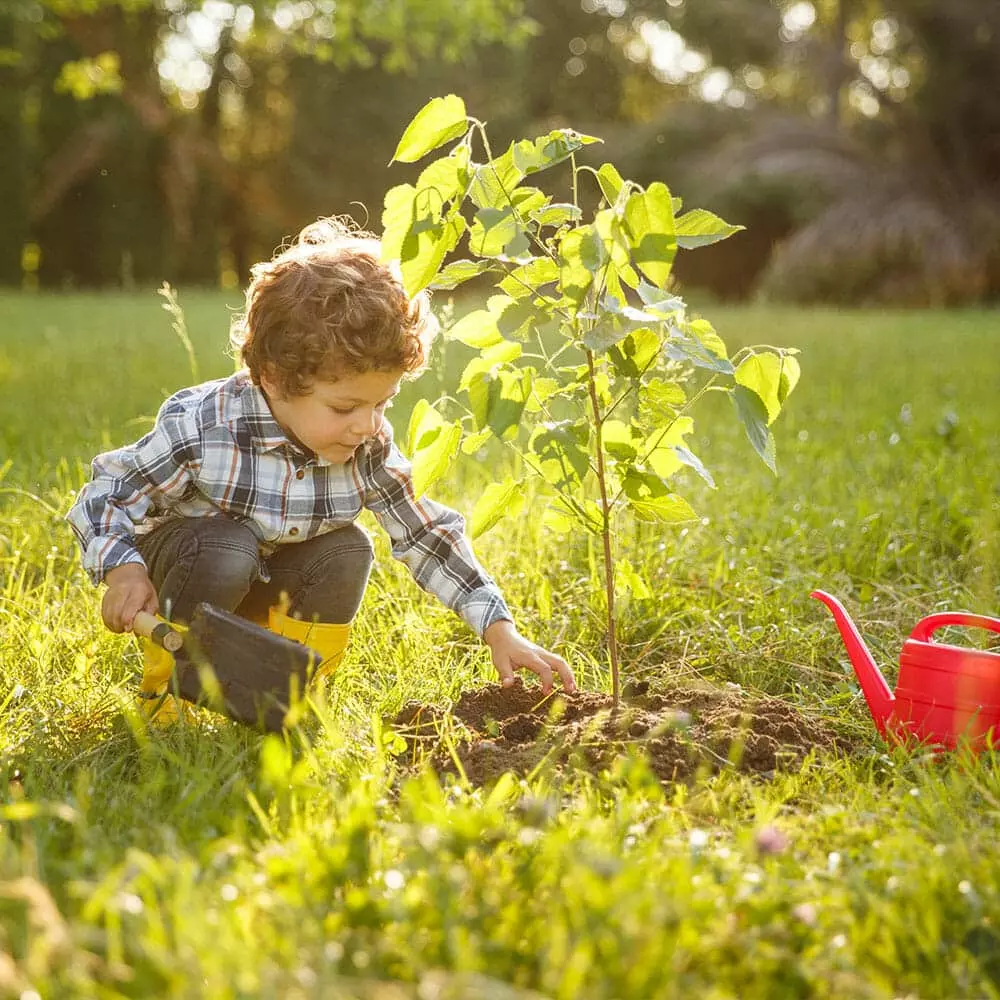
- Watering through year three. Conifers do not show drought stress as obviously as deciduous trees — by the time needles brown, root damage is already done. Plan on deep watering once or twice per week through the dry season for the first three growing seasons.
- Mulch heavy, but never against the trunk. 3 to 4 inches of arborist wood chips in a wide ring (4 to 6 feet across) supports conifer root development. Pull mulch back 2 to 3 inches from the trunk to prevent root collar disease.
- Skip nitrogen fertilizer. PNW native conifers do not need synthetic nitrogen. Excess nitrogen creates soft growth that is more vulnerable to disease and breakage.
- Do not top. Topping a conifer (cutting the leader to reduce height) creates permanent structural defects, multiple co-dominant leaders, and accelerated decay. It also voids any reasonable risk assessment. Pacific Arboriculture does not top trees; structural pruning follows ANSI A300 standards.
- Watch for fading crowns. Healthy conifer crowns hold dense, evenly colored needles. Yellowing, thinning, or one-sided fading is an early warning that warrants a closer look.
Pruning Conifers: When and How
Most conifers in residential landscapes need very little pruning. The genus is “excurrent” — single dominant leader with whorled lateral branches — and pruning the wrong branch creates lasting structural problems. General guidelines for the south Puget Sound:
- Best window: Late spring through mid-summer, after the new growth flush hardens off. Avoid late fall and winter pruning, which exposes wounds to wet-weather fungal infection.
- Lower limb removal: Acceptable to raise crowns for clearance, but maintain at least two-thirds of the canopy as live limbs to preserve structural integrity.
- Never remove the leader. The central leader is the structural backbone of the tree. Damage to the leader from storm or improper pruning often cannot be corrected.
- Co-dominant leaders: If two leaders develop, structural pruning should select one before the trunks reach 4 inches in diameter. Past that point, removal of one leader creates a wound too large to close cleanly.
Common Conifer Issues to Watch For
- Top dieback on Western Redcedar — drought stress signature; advancing dieback warrants evaluation, but minor flagging often recovers.
- Resin “pitching” on Douglas Fir trunks — defensive response to bark beetle attack; fresh, sticky resin is normal, dry resin holes with red dust below are a concern.
- Fading or yellowing crown — root rot, drought stress, or insect pressure; needs a hands-on assessment.
- Leaning trunk after a wind event — soil failure from saturated ground; trees that lean more than 15 degrees from vertical are hazard-tree candidates and should be evaluated immediately for removal or remediation.
- Cracking or fissured bark with mushrooms at the base — root or butt rot indicators; mushrooms (conks) at the base of a conifer are a serious finding.
- Heavy cone year — sometimes a stress signal, sometimes a normal cycle; a trained arborist can distinguish.
Species in This Category
The species pages below cover the most-commonly installed and serviced trees in this category — each with planting, watering, fertilizing, and pruning guidance plus a quick-reference spec panel.
- Hinoki Cypress (Chamaecyparis obtusa) — planting, watering, fertilizing, and pruning notes for the south Puget Sound.
- Blue Atlas Cedar (Cedrus atlantica ‘Glauca’) — planting, watering, fertilizing, and pruning notes for the south Puget Sound.
- Mugo Pine (Pinus mugo) — planting, watering, fertilizing, and pruning notes for the south Puget Sound.
- Austrian Pine (Pinus nigra) — planting, watering, fertilizing, and pruning notes for the south Puget Sound.
- Colorado Blue Spruce (Picea pungens) — planting, watering, fertilizing, and pruning notes for the south Puget Sound.
- Lemon Cypress (Hesperocyparis macrocarpa ‘Goldcrest’) — planting, watering, fertilizing, and pruning notes for the south Puget Sound.
- Alaskan Weeping Cedar (Callitropsis nootkatensis ‘Pendula’) — planting, watering, fertilizing, and pruning notes for the south Puget Sound.
When to Bring in an ISA Certified Arborist
Mature conifers — particularly tall Douglas Firs and Western Redcedars — pose hazard-tree risks that smaller trees do not. Cracks, leans, mushrooms at the base, fading crowns, or visible decay all warrant a hands-on evaluation. Pacific Arboriculture’s ISA Certified Arborists handle conifer installation, structural pruning, hazard assessments, and storm cleanup across Auburn, Kent, Tacoma, Federal Way, Renton, Puyallup, Sumner, Lake Tapps, Covington, and the broader south Puget Sound. For an arborist report, removal estimate, or PHC program, request a free quote or call (206) 909-2170.
Conifer Aftercare FAQ
Q: Why is the top of a Western Redcedar turning brown?
A: Most often drought stress. Western Redcedar is sensitive to soil moisture, and the last several PNW summers have pushed many trees past their tolerance. Deep watering through the dry season can stabilize a stressed cedar; advanced dieback warrants an arborist evaluation.
Q: Should the lower branches on a Douglas Fir be removed?
A: Limb-up to gain clearance is fine, but maintain at least two-thirds of the canopy as live branches. Excessive lower-limb removal weakens structure and exposes the trunk to sun damage.
Q: Is it safe to top a tall conifer to reduce wind risk?
A: No. Topping a conifer creates more wind risk over time, not less, by forcing weakly attached re-growth. Hazard reduction is handled through targeted structural pruning or — in genuinely hazardous cases — removal.
Q: What does it mean if mushrooms appear at the base of a fir?
A: Conks (woody mushrooms) at the base of a conifer indicate root or butt rot. The tree should be evaluated by an ISA Certified Arborist. In many cases, the structural integrity of the lower trunk has already been compromised.