
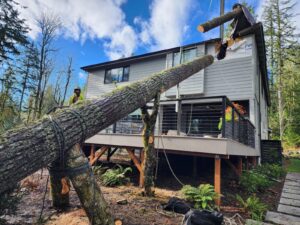
How to Prepare Trees for Winter Storms: A South Sound Storm Prevention Guide
Saturated soil and winter wind regularly bring down western Washington trees. Warning signs to check, what wind damage looks like, and pruning that helps.
Follow us Online:
Read professional tree care articles from certified arborists. Discover pruning tips, tree health advice, removal guidance, and seasonal landscape care.

Saturated soil and winter wind regularly bring down western Washington trees. Warning signs to check, what wind damage looks like, and pruning that helps.

An uprooted tree can usually be saved only if it is small, such as a newly planted tree or one under 4 inches in diameter. How to read full uproots, root-sprung leans, root disease and hung-up trees, and what to do first.

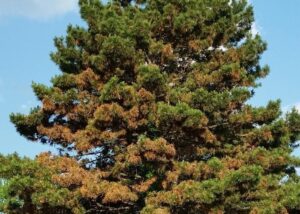
Most fall browning on South Sound conifers is normal needle drop. How to tell it apart from drought damage, needle disease, root rot and bark beetles.

Washington just entered its fourth consecutive drought year, and by August most South Sound yards have more trees than water to go around. Dragging a sprinkler across the property wastes water on trees that never needed it and starves the ones already in trouble. Drought tolerance is not universal.

Federal forecasters placed the entire state at above-average wildfire potential through September, and that outlook includes the western lowlands, not just the dry country east of the Cascades. Most defensible-space advice focuses on clearing brush. Species selection gets skipped almost every time. Yet the tree planted this fall largely determines

Western Washington does not get many thunderstorms, and that is exactly why a lightning strike catches homeowners off guard. The state averages roughly 20,000 lightning flashes a year, a modest number next to the Midwest or the Southeast. But a single strike can ruin a mature Douglas fir in less