
Most people picture tree removal as a climber with ropes, a chainsaw, and (hopefully) a careful plan. And honestly, that’s still the right approach for many removals. But when a tree is extremely large, structurally compromised, or boxed in by homes, fences, driveways, or power lines, traditional rigging can become riskier and less efficient. That’s where crane-assisted tree removal comes in.
A crane doesn’t make the work easy. It does make the work more controlled. With the right planning and certified expertise, crane-assisted removals allow crews to lift large sections of a tree safely, lower them into a designated drop zone, and reduce the chance of collateral damage to your property.
To see how Pacific Arboriculture approaches crane removals in Puget Sound:
The big reason: better control in a high-risk situation
When removals get technical, control becomes the name of the game. A crane can help crews manage the weight and movement of large sections that would otherwise be rigged, swung, and lowered using ropes alone. That reduces unknowns on the jobsite and gives the crew a safer path to a clean finish.
This is especially valuable when:
- The tree is too unstable to climb safely
- There’s a limited drop zone
- The tree is close to structures or valuable landscaping
- The tree is leaning heavily or has compromised wood
- The removal involves tight access between homes or along fences
- The tree is near utility lines, where safety and clearance rules matter
When crane-assisted tree removal makes the most sense
Cranes are not automatically required for big trees. A skilled crew can remove many large trees without one. There are, however, scenarios where a crane becomes the safer, smarter option.
Tight access and urban removals
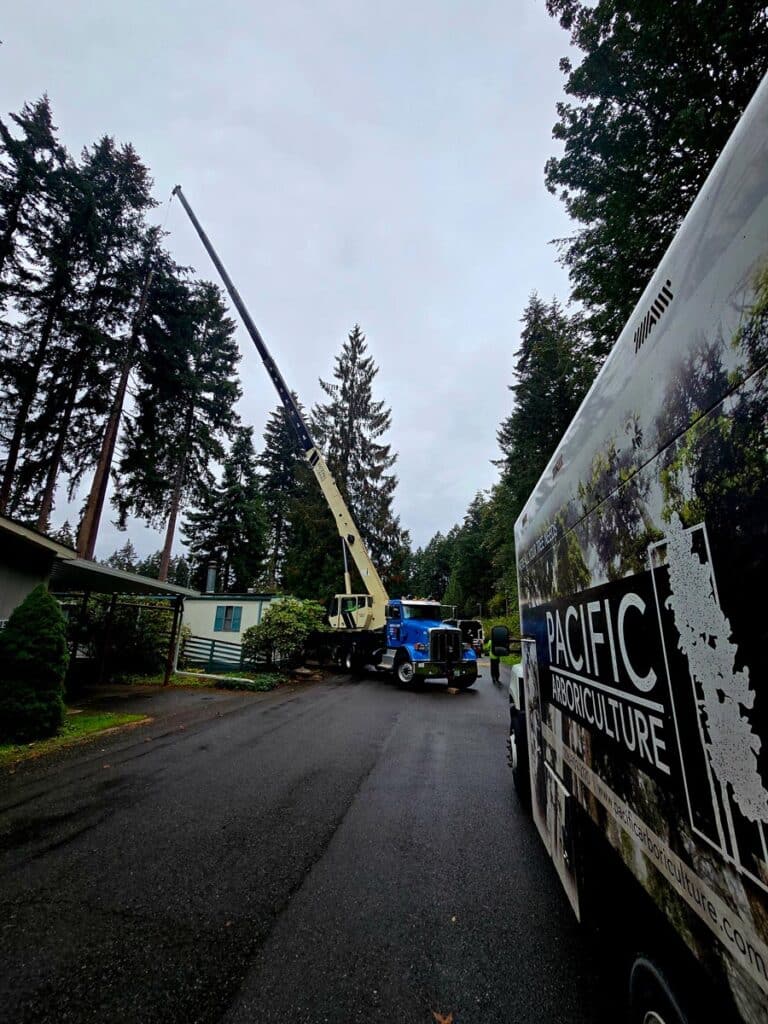
If you have a large tree wedged between a home and a fence line, there may be no safe way to drop pieces without risking damage. A crane can lift sections straight out of the canopy and place them exactly where the crew needs them.
Storm-damaged or decaying trees
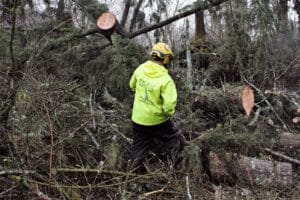
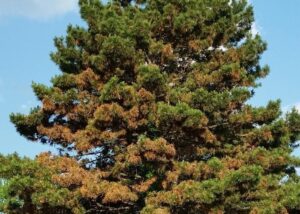
Storm damage can leave a tree unpredictable. Internal decay, cracked stems, or broken tops can make climbing unsafe. Crane-assisted removal can reduce time spent working in compromised wood and help get hazards down faster.
If your tree is storm-damaged, learn more about our services:
Limited drop zones and high-value property features
Many properties have patios, retaining walls, sheds, gardens, and carefully designed landscapes. A crane can help lower large pieces into a controlled area rather than swinging them over sensitive spaces.
Large sections that are simply safer to lift
Even when rigging is possible, it isn’t always ideal. A crane can reduce the need for complex rigging on heavy sections, which can lower the chance of shock loading, uncontrolled swing, or ground impact.
Benefits homeowners actually notice
Crane work can sound dramatic, but the real-world benefits are quite practical.
Safer work around structures and utilities
Safety standards around overhead lines and crane work are strict for good reason. The professional approach is careful planning, trained operators, and maintaining proper clearances. If your tree is near lines, that’s not a “try your luck” situation.
Faster removals for certain jobs
Crane-assisted removal can reduce the total time on-site for complex removals because large sections can be lifted and set down quickly rather than pieced down with multiple rigging cycles. Faster doesn’t mean rushed. It means efficient execution with a clear plan.
Cleaner results and less property disruption
Less dragging, less dropping, and less impact work can translate into a cleaner jobsite. Many crane jobs are designed to minimize turf damage and reduce the amount of heavy movement across the property.
What to expect from a crane-assisted removal
A professional crane-assisted removal should feel organized, not chaotic.
Typical steps can include:
- On-site evaluation to confirm if a crane is needed and determine safe setup access
- A written estimate covering scope, equipment, and any permit considerations
- Crane positioning and jobsite setup (sometimes including traffic control planning, depending on location)
- Sectional removal where pieces are secured, cut, and lifted under controlled signals
- Ground processing (limbing, cutting, chipping/hauling)
- Full cleanup and final walkthrough
Pacific Arboriculture’s crane removal overview:
Why certification matters even more with crane work
If there’s any category of tree work where “close enough” is not acceptable, it’s crane-assisted removals. You want a company that can coordinate arborist judgment, rigging, operator skill, and jobsite safety as one system.
Pacific Arboriculture highlights:
- ISA Certified Arborists guiding the plan and overseeing work
- NCCCO crane-certified operators
- Professional rigging systems for technical removals
- Experience with tight access and high-risk removals throughout Puget Sound
If you’re comparing options, it’s also worth reviewing our overall removal approach:
FAQs about crane-assisted tree removal
Does using a crane always cost more?
Not always, and not when you consider the alternate costs that can come on the back end of tree work. A crane can add equipment costs, but on highly complex jobs it may reduce labor hours and lower the chance of property damage. The best way to know is an on-site evaluation.
Will a crane damage my driveway or lawn?
A professional crew plans equipment access carefully and uses ground protection strategies when needed. The goal is always to reduce property impact, not create new problems.
Can a crane remove a tree near a house without damage?
That’s one of the main reasons cranes are used. They improve control for removals near homes, fences, and tight spaces. No method eliminates risk completely, but crane assistance is often the safest approach in high-consequence locations.
What about storm emergencies?
Crane-assisted removals can be especially helpful after storms when trees are unstable or dangerous to climb.
Wondering if your tree needs a crane?
If you’re dealing with a large tree near your home, a leaning trunk, storm damage, or tight access, the safest next step is to schedule a professional evaluation. Pacific Arboriculture can assess the site, explain the options clearly, and recommend the safest method for your property.