Late spring and early summer is peak tent caterpillar season in western Washington. Homeowners in Auburn, Kent, Federal Way, Puyallup, and Renton often spot the same sequence of warning signs in May and June: silky white nests in the crotches of fruit trees and ornamentals, hundreds of striped caterpillars marching along branches, and entire limbs stripped of leaves seemingly overnight. The good news is that healthy, mature trees can usually tolerate a single year of heavy tent caterpillar defoliation. The bad news is that an outbreak can stack with drought stress, root issues, or repeated infestations to push a tree past the point where it can recover on its own.
This guide walks Pacific Northwest homeowners through how to identify the two tent caterpillar species seen most often in the South King and Pierce County service area, when manual removal is appropriate, when an arborist or PHC treatment is warranted, and what to watch for after the leaves are gone.
Which Tent Caterpillar Is on Your Tree?
Two species drive most of the calls Pacific Arboriculture receives in late spring across Tacoma, Sumner, Bonney Lake, and Edgewood. Identification matters because their feeding behavior, host preferences, and tent-building habits are different — and the right response depends on which one is present.
Western Tent Caterpillar (Malacosoma californicum pluviale)
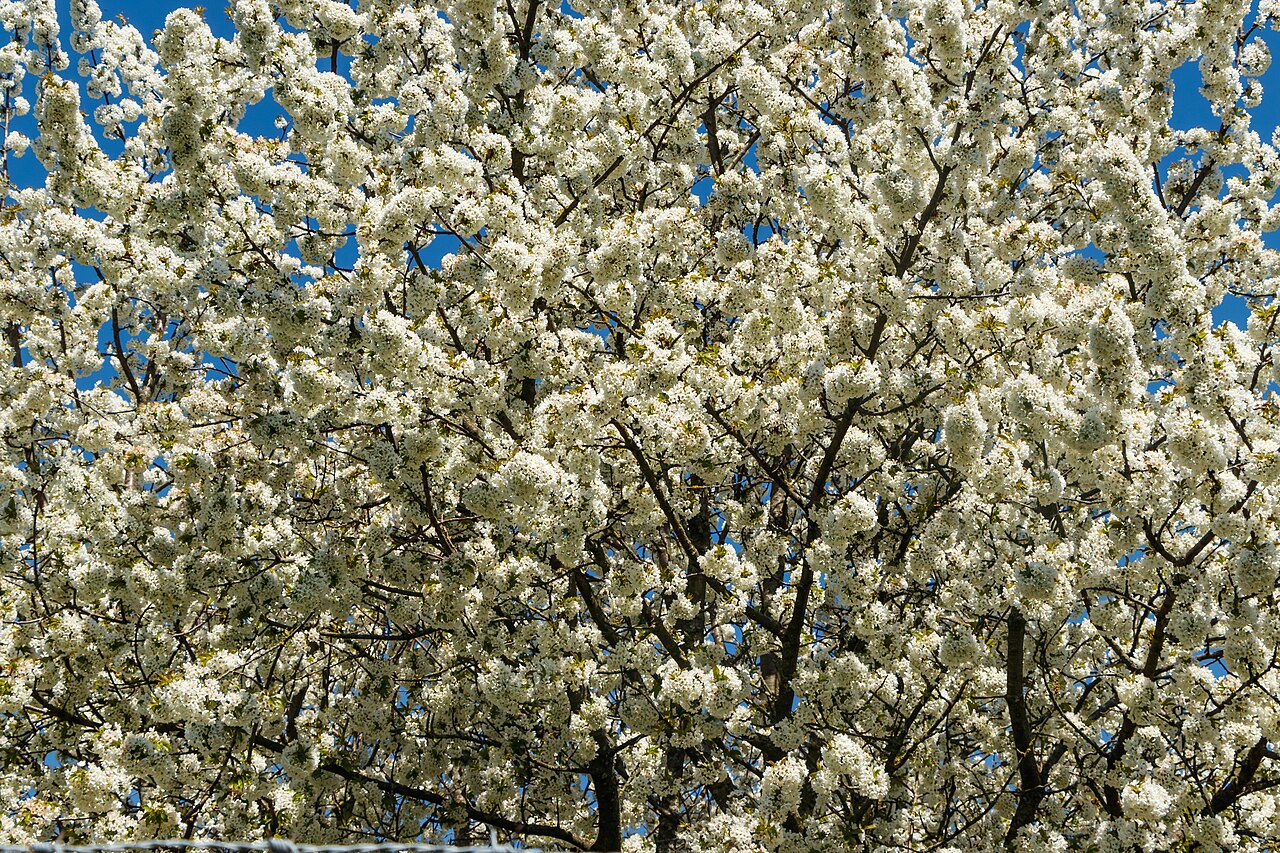
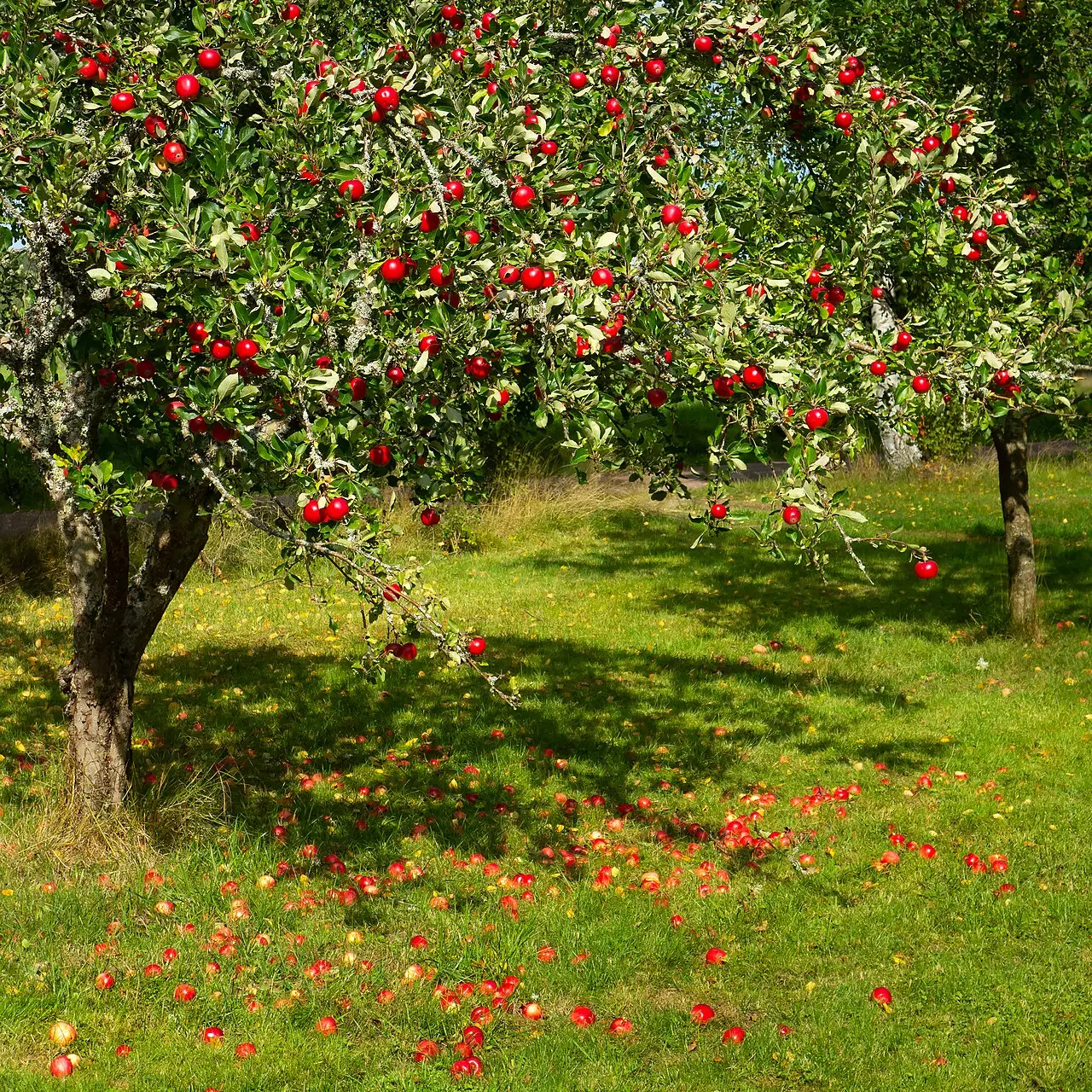
The western tent caterpillar is the species most commonly seen in suburban yards across Pierce and King counties. Larvae are dark with a row of blue and orange markings down each side and reach roughly two inches at maturity. They build conspicuous silky white tents in the forks of host branches and leave the tent in groups to feed on nearby foliage, returning at night and during cold or wet weather. Preferred hosts include alder, willow, ornamental cherry, plum, apple, and crabapple — a list that overlaps heavily with backyard fruit trees and street trees in Lake Tapps, Covington, and Maple Valley.
WSU Extension King County: Pests in the Landscape
Forest Tent Caterpillar (Malacosoma disstria)
Despite the name, the forest tent caterpillar does not actually build a tent. Instead, larvae spin a silken mat on the trunk or large limbs where they cluster between feeding bouts. They are dark blue with a row of distinct keyhole or footprint-shaped white markings down the back. In western Washington, forest tent caterpillar outbreaks tend to be cyclical, with population peaks every 8-12 years that can defoliate large stands of alder, maple, and aspen before collapsing again. A homeowner in Burien, Tukwila, or SeaTac who sees a cluster of striped caterpillars on a maple trunk without an obvious tent is most likely looking at this species.
Why June Matters for Tent Caterpillar Management
Tent caterpillar life cycle in the Pacific Northwest follows a predictable arc. Egg masses overwinter as dark, varnished bands wrapped around small twigs. Larvae hatch in April as buds break, feed and grow through May and early June, then pupate in cocoons tucked into bark crevices, leaf litter, or nearby structures. Adult moths emerge in late June and July, mate, and lay the next generation of egg masses before dying.
The practical implication for homeowners in Auburn, Pacific, Fife, and Des Moines is that the window for effective intervention is narrow. By the time most people notice the defoliation, the caterpillars are already in their final feeding push. Chemical or biological treatments are most effective on small larvae in early to mid-May. By late June, larvae are pupating and treatments have minimal impact — the damage is done, and management shifts to assessing tree health and preventing next year’s outbreak.
Manual Removal: When It Works and When It Doesn’t
For small ornamental cherries, plums, and apples within reach from the ground or a sturdy step ladder, manual nest removal is the simplest and lowest-risk response. The technique is straightforward: in early morning or late evening when caterpillars are clustered inside the tent, the nest is wrapped, twisted off the branch, and destroyed by submerging in soapy water or sealed in a trash bag.
What Homeowners Should Avoid
Two homeowner responses regularly cause more damage than the caterpillars themselves. The first is burning nests in place with a torch or lighter — a practice that scorches living bark, kills the cambium in the limb crotch where most nests form, and creates a permanent wound that invites decay fungi. The second is heavy pruning to remove every infested branch. Stripping a tree of healthy structural limbs to chase down a transient pest weakens the tree, opens it to sunscald, and sets up problems that long outlast the caterpillar outbreak.
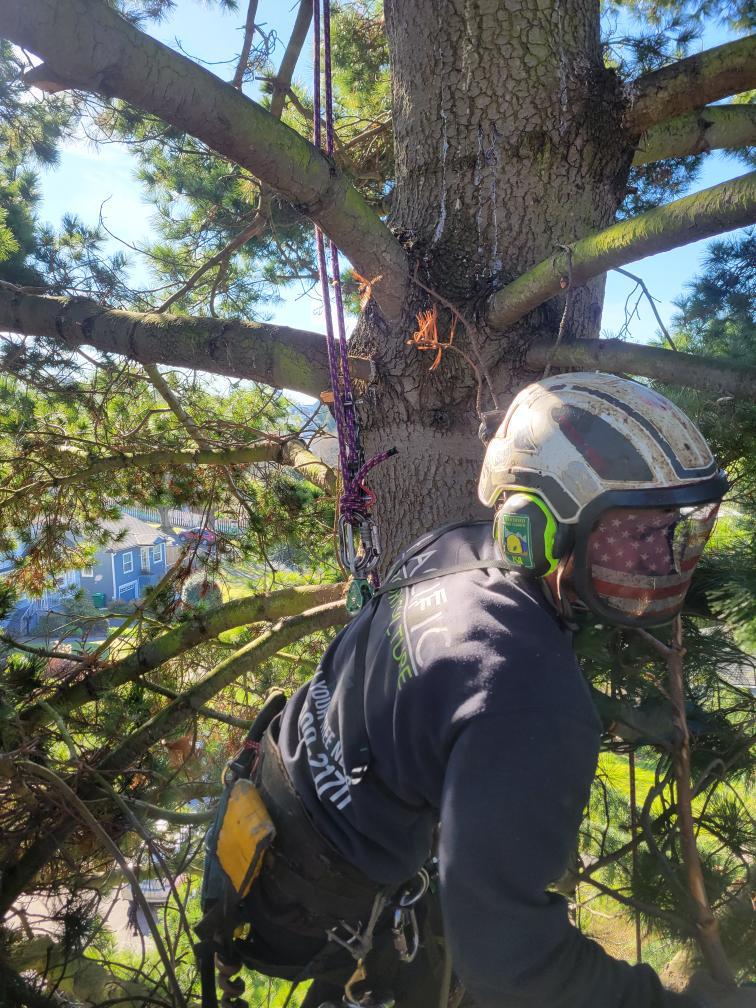
For Sumner, Puyallup, and Bonney Lake homeowners with larger trees — mature maples over 30 feet, alders along property lines, or fruit trees with nests high in the canopy — manual removal usually isn’t safe or practical. That’s where a certified arborist assessment is the right next step. Understanding what an arborist does can help homeowners know what to expect from a visit.
When to Call an Arborist
Pacific Arboriculture recommends contacting an ISA Certified Arborist when any of the following conditions apply to a Federal Way, Renton, or Kent property:
Nests are above 15 feet or in branches not safely reachable from the ground. Multiple trees on the same property are simultaneously affected. The host tree has shown other stress symptoms in the past year — early leaf drop, dieback, drought damage, or repeated heavy defoliation. The infestation is on a high-value tree near a structure, walkway, or driveway where dropping caterpillars and frass are creating ongoing nuisance issues. The tree is a fruit-producing apple, pear, or stone fruit where defoliation is reducing the crop and a properly timed treatment in future years would protect yield.
An arborist visit at this stage typically covers identification, an assessment of how much canopy has been lost, a check for secondary stressors like drought or root damage, and a written recommendation for the rest of the season. For trees that have already been defoliated, the immediate priorities are usually deep watering through the dry months and avoiding additional stress — not treatment of the caterpillars themselves.
Treatment Options for Active Infestations
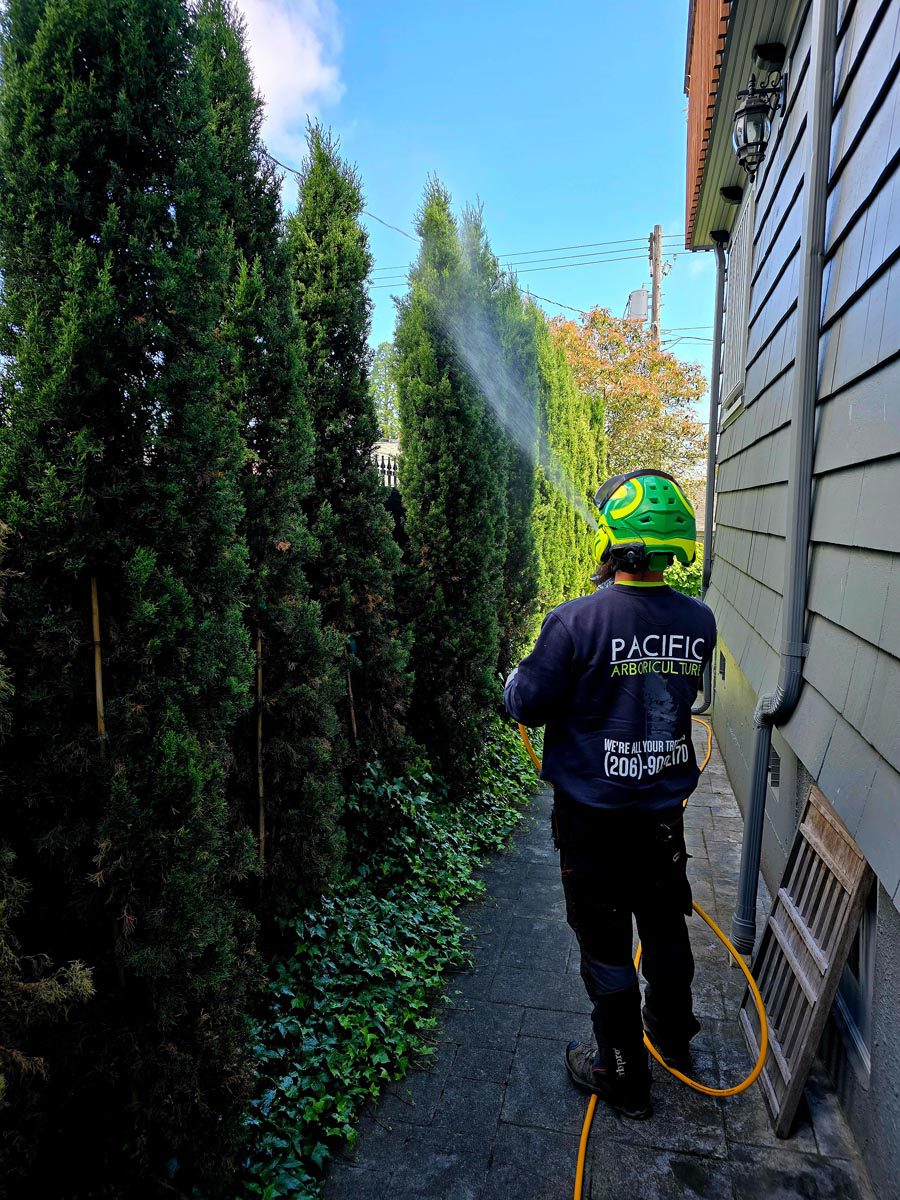
When treatment is warranted — typically on high-value ornamental or fruit trees with recurring infestations — the most commonly used product in the Pacific Northwest is Bacillus thuringiensis kurstaki (Btk). Btk is a naturally occurring soil bacterium that produces a protein toxic specifically to caterpillar larvae. It does not harm bees, beneficial insects, birds, pets, or people, which makes it well-suited for residential properties in Maple Valley, Covington, and Tukwila where pollinator concerns are paramount.
Timing is everything. Btk works only on actively feeding small larvae, so applications need to happen in early to mid-May when caterpillars are still in their first three instars. By the time tents are highly visible and caterpillars are roaming the canopy, the treatment window for Btk has largely closed.
WSU Hortsense: Tent Caterpillars
What About Systemic Treatments?
For repeated infestations on prized specimen trees, a licensed arborist may recommend a systemic tree injection as part of an ongoing plant healthcare program. Injections deliver insecticide directly into the vascular system, avoiding drift and pollinator exposure that comes with foliar sprays. This route is more appropriate for chronic problems on a single high-value tree than for a one-off outbreak on a backyard cherry — and it requires accurate species identification and timing to be effective.
What Defoliation Means for the Tree
A healthy, mature tree in good overall condition can usually survive a single year of heavy tent caterpillar defoliation. Deciduous trees typically push out a second flush of leaves in mid to late summer once the caterpillars finish feeding, and most return to normal foliage production the following spring. That said, defoliation is a stress event, and the tree’s response depends on what else is happening to it — which is why preventative tree care matters more than reactive treatment for most properties.
Risk Factors That Compound the Damage
Trees in Auburn, Fife, and Edgewood that have already been weakened by drought, construction damage, soil compaction, or recent root disturbance are far more vulnerable to secondary problems after defoliation. The combination most likely to push a tree into long-term decline is heavy defoliation followed by a hot, dry summer with no supplemental watering — exactly the pattern western Washington has trended toward in recent years. Repeated defoliation in consecutive seasons also drains the tree’s stored carbohydrates and can eventually kill otherwise healthy specimens. Property owners weighing whether a defoliated specimen is worth saving may find the troubled tree keep-or-remove guide useful.
An arborist consultation after defoliation is most useful when the tree is large, near a structure, has shown prior decline, or is a species particularly prone to follow-on issues — alders, for example, often show branch dieback the year after a heavy outbreak.
Preventing Next Year’s Outbreak
The most effective long-term control for tent caterpillars is one Pacific Northwest homeowners rarely associate with pest management: winter egg-mass scouting. Female moths lay 150-350 egg masses each summer, wrapped as dark, glossy bands around small twigs typically less than half an inch in diameter. Between late November and bud break in April, those egg masses are visible to anyone willing to walk the tree on a clear winter day.
Removing egg masses from the limbs of small ornamentals on a property in Burien, SeaTac, Des Moines, or Normandy Park during dormant season eliminates that population before it ever hatches. For larger trees where egg masses are out of reach, a pre-spring inspection by a certified arborist can identify whether populations are building toward an outbreak year — useful intel for deciding whether a Btk application in early May is justified.
FAQ: Tent Caterpillars in Western Washington
Will tent caterpillars kill a tree?
A single season of defoliation is rarely fatal to a healthy mature tree. Repeated defoliation across multiple years, defoliation combined with drought stress, or defoliation on a tree already in decline are the conditions that cause long-term damage or death.
Is whole-yard spraying a good idea?
Broad-spectrum spraying is not recommended. Btk applied to specific infested trees at the right time of year is the standard approach. Whole-yard insecticide applications kill beneficial insects and pollinators without delivering meaningfully better tent caterpillar control than targeted treatment.
Is it safe to burn tent caterpillar nests with a torch?
No. Burning nests damages bark, kills the cambium, and creates a wound that invites decay fungi into the limb crotch. The long-term damage to the tree often outlasts the original infestation by years. Manual removal with gloved hands or pruning out the small branch holding the nest are both safer alternatives.
How are tent caterpillars different from fall webworms?
Tent caterpillars build their nests in branch crotches in spring and feed outside the tent. Fall webworms build large webs that enclose entire branch tips and feed inside the webbing in late summer. Both are typically more cosmetic than fatal to healthy trees in the South King and Pierce County area.
Do tent caterpillars come back every year?
Western tent caterpillar populations fluctuate year to year and tend to peak in cycles of roughly 6-11 years before crashing. Forest tent caterpillar outbreaks follow longer cycles of 8-12 years. Even in non-outbreak years, scattered small infestations are normal across western Washington.
When to Get a Professional Assessment
Pacific Arboriculture’s ISA Certified Arborists handle tent caterpillar evaluations across Auburn, Kent, Federal Way, Tacoma, Puyallup, Renton, Sumner, Maple Valley, Burien, Tukwila, Des Moines, SeaTac, Covington, Bonney Lake, Lake Tapps, Edgewood, Pacific, Fife, Fairwood, and Normandy Park. The most useful time to involve an arborist is either before the outbreak — for winter egg-mass scouting and an early-May treatment decision — or after defoliation, to assess tree health, set a watering plan, and decide whether ongoing plant healthcare is justified.
For homeowners noticing defoliation, dieback, or multiple stress signs on the same tree, a written arborist report documents tree condition, treatment recommendations, and any safety concerns — and gives the property owner a baseline to compare against next season. Request a free quote for tent caterpillar assessment, PHC consultations, or any of the tree services Pacific Arboriculture offers throughout the South King and Pierce County region.
WSU Puyallup Extension: Insect Publications
WSU Forestry: Pacific Northwest Forest Insects
Washington DNR: Forest Health Monitoring
WSU Master Gardener Program: Insect and Pest Resources