Western Washington’s mild, wet climate produces some of the most productive forests in North America — and some of the most aggressive fungal pathogens. By the time June rolls in, the cool spring rains that drive new growth have also created the perfect incubation conditions for leaf spot, anthracnose, canker, rust, and root rot pathogens that show up on residential trees across the South Sound.
This visual field guide covers the fungal tree diseases that PNW homeowners encounter most often, the symptoms that distinguish each one, and the treatment paths a tree health management (PHC) plan typically pursues. Pacific Arboriculture serves homeowners across Maple Valley, Federal Way, and Tacoma with ISA Certified Arborist diagnostics on every visit — and the most common question that triggers a call is some version of “what is this spot on the leaves?”
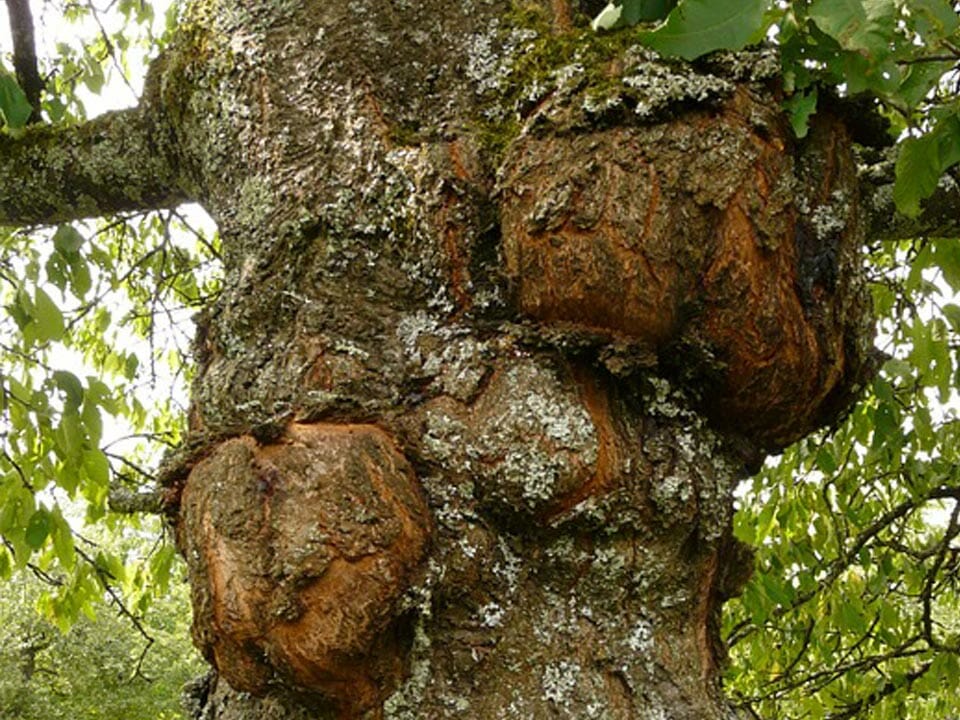
Why Fungal Diseases Hit Western Washington Trees So Hard
The Pacific Northwest sits in a temperate rainforest band where annual rainfall in cities like Tacoma and Puyallup runs 40–55 inches per year, with a long cool-wet shoulder season from October through June. That moisture profile is exactly what most foliar fungal pathogens need to germinate spores, infect new tissue, and reproduce. Add the dense, structurally diverse landscapes that surround homes in Maple Valley, Renton, and Auburn — mature Douglas-fir, big-leaf maple, native dogwood, ornamental cherry, hawthorn, and apple — and the disease pressure stays high through most of the growing season.
Three site-level conditions amplify fungal pressure on residential trees:
- Poor air movement: Tightly spaced ornamentals or trees crowded against fences and structures keep canopies damp for hours after rain stops.
- Overhead irrigation: Sprinkler systems that wet foliage daily — common on properties in Edgewood, SeaTac, and Federal Way — extend leaf-wetness duration well past natural rainfall.
- Compacted or poorly drained soils: New construction lots across Sumner, Pacific, and Covington often have subsurface compaction that holds water at the root zone, opening the door to root and butt rot pathogens.
Knowing the conditions is half the diagnosis. The other half is matching the symptom to the right pathogen — which is where this field guide comes in.
Anthracnose (Discula, Apiognomonia, Colletotrichum)
Anthracnose is the catch-all name for several related fungal pathogens that infect new spring foliage during the cool-wet weeks of April through early June. It is the single most common foliar disease arborists in Maple Valley and Kent diagnose every year on big-leaf maple, native dogwood, ash, and oak.
What homeowners see: Brown or black blotches that follow the leaf veins, distorted or cupped young leaves, premature leaf drop in late May or June, and on dogwood, sunken tan cankers on twigs and small branches. Severe anthracnose can defoliate a tree’s lower canopy by July, leaving the crown looking thin and stressed.
What homeowners should do: Anthracnose rarely kills established trees, but repeat infections weaken them over multiple seasons. The PHC priorities are sanitation (raking and removing infected leaves in fall), structural pruning to improve airflow inside the canopy, and on high-value specimens — especially dogwood — preventive fungicide applications timed to bud break. A PHC visit in late winter is the right time to plan the protective sprays.
Septoria, Cercospora, and Other Leaf Spot Diseases
Leaf spot is a broad category covering dozens of fungal pathogens that produce small, discrete spots on foliage rather than the blotchy patterns of anthracnose. Septoria leaf spot is common on dogwood, while Cercospora shows up on maples and hydrangeas — though hydrangea care is outside arborist scope and falls to landscape maintenance.
Diagnostic clues: Spots are typically round or angular, 2–10 mm across, and often have a dark border with a lighter center — sometimes called “frog-eye” lesions. On the underside of the leaf, a hand lens may reveal tiny black fruiting bodies. Spots often coalesce as the season progresses, and severely infected leaves drop early.
Treatment realism: Leaf spot rarely justifies fungicide treatment on shade trees. The disease is unsightly but not life-threatening, and the cost-benefit of repeat spraying through a wet PNW spring does not pencil out for most residential canopies. The arborist recommendation is almost always sanitation, structural pruning for airflow, and patience.
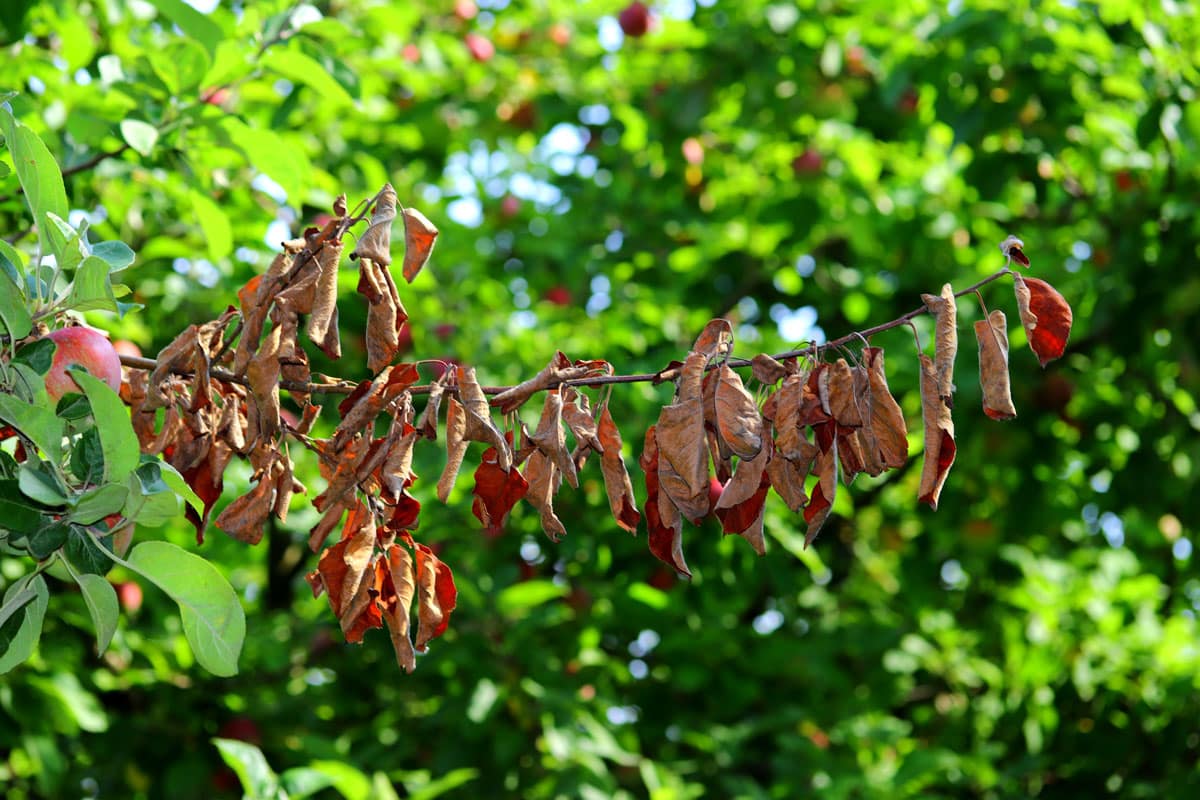
Fire Blight (Erwinia amylovora) on Ornamental Pear, Apple, and Hawthorn
Fire blight is technically a bacterial disease, not a fungus — but it is so commonly diagnosed alongside fungal pathogens on the same host trees (ornamental pear, apple, crabapple, hawthorn, mountain ash, serviceberry) that homeowners across Federal Way and Tacoma regularly bundle it into the same diagnostic call: “what is happening to this tree?”
The look: Branch tips that suddenly wilt, blacken, and bend into a distinct “shepherd’s crook.” Blossoms turn brown and stay attached. Bark on infected branches appears water-soaked and may ooze a sticky amber bacterial exudate in warm weather. The damage cascades fast — a healthy ornamental pear can lose major scaffold limbs in a single growing season.
Response: Fire blight requires aggressive pruning 8–12 inches below the visible canker, with tools sterilized between every cut (10% bleach or 70% alcohol). Timing matters — dormant-season pruning when bacteria are inactive is far safer than pruning in summer when active bacteria spread through wound sites. On high-value specimens, copper-based bactericides applied at bud break and bloom reduce infection rates. Severely infected ornamental pears are often candidates for removal rather than ongoing salvage.
Cankers — Cytospora, Nectria, and Botryosphaeria
Cankers are localized infections in the bark and underlying cambium that interrupt the tree’s vascular flow. They show up as sunken, discolored patches on trunks and major scaffold limbs, often with cracked or peeling bark and sometimes with small black or orange fruiting bodies arranged in concentric patterns.
Common PNW canker hosts: Cytospora canker is endemic on stressed spruces — including the Colorado blue spruces that struggle in Pacific Northwest heat. Nectria canker shows up on maples, oaks, and birches. Botryosphaeria affects rhododendrons and a wide range of woody ornamentals across Maple Valley and Covington.
What cankers actually mean: Most canker pathogens are opportunistic — they invade trees already stressed by drought, soil compaction, transplant shock, or mechanical wounding. A canker diagnosis is often a signal to investigate the underlying stressor. Treatment focuses on removing infected branches well below the canker margin, supporting tree vigor through deep root watering during the dry months, and avoiding further mechanical injury. There is no chemical “cure” for an active canker.
Rust Diseases — Cedar-Apple, Pear Trellis, and Pine Needle Rust
Rust fungi require two different host species to complete their lifecycle, which creates some of the more dramatic disease symptoms in PNW yards. Cedar-apple rust alternates between native cedars and apple/crabapple trees. Pear trellis rust uses juniper as its alternate host and produces striking orange spots on pear leaves with cup-shaped fruiting bodies underneath.
Field identification: Rust diseases produce bright orange, yellow, or rusty-brown pustules — usually on the underside of leaves — that can rub off as a powdery spore mass. On host conifers, the pathogen forms gelatinous orange galls during warm spring rains, releasing spores that infect nearby deciduous hosts.
Practical management: Removing one of the two host species is the most effective long-term control — typically the juniper or cedar in the landscape, since the deciduous host is usually the more valued specimen. Where both hosts must stay, fungicide applications timed to spore release windows can suppress symptoms on apple, pear, and crabapple. PHC plans for clients with prized fruit and ornamental trees in Federal Way and Burien often include rust management as a standing line item.
Root and Butt Rot — Armillaria, Heterobasidion, Phytophthora
Root rot is the disease category that homeowners in Tacoma and Lake Tapps most often discover too late. Unlike foliar pathogens that announce themselves on the leaves, root rot works invisibly underground for years before crown symptoms appear.
Warning signs: Thinning canopy, smaller-than-normal new leaves, early fall color, dead branches scattered through the upper crown, and — the diagnostic giveaway — mushroom fruiting bodies at the base of the trunk or on surface roots during the fall rains. Armillaria produces honey-colored mushroom clusters at the root flare. Heterobasidion (annosus root rot) forms hard, layered conks on conifer stumps and root collars.
Why this matters for safety: Trees with active root rot lose structural support from the inside out long before the canopy collapses. A Douglas-fir with advanced Armillaria can stand looking healthy and then fail suddenly during a moderate windstorm. This is the disease category that drives tree risk assessment calls in Bonney Lake and Normandy Park every winter. Treatment options are limited; in most cases, infected high-target trees become removal candidates, and crane-assisted removal is often the safer approach on trees with compromised root systems.

Powdery Mildew on Maples, Oaks, and Ornamentals
Powdery mildew is the white, dusty coating that appears on leaf surfaces in mid to late summer — most visible on big-leaf maple, native and ornamental oaks, dogwood, and many flowering shrubs across Tukwila, Des Moines, and Maple Valley.
Why arborists rarely treat it: Powdery mildew is largely cosmetic on established trees. It develops late enough in the season that leaves are nearing senescence anyway, and the energy cost to the tree is modest. Healthy trees with good air movement around them shed the problem on their own. The main exception is on young, recently transplanted ornamentals where heavy mildew can compound transplant stress — in those cases a targeted fungicide application can be justified.
When to Call an Arborist vs. Manage at Home
Most fungal leaf diseases on mature shade trees do not require professional intervention. Sanitation, structural pruning for airflow, and supporting tree vigor through summer watering handle 80% of cases without chemicals. The threshold for a PHC consultation shifts when one or more of these red flags appears:
- Symptoms on multiple trees at once — points to landscape-wide cultural problems
- Cankers or bark damage on the main trunk or major scaffold limbs
- Mushrooms or conks at the root flare
- Wilting, dieback, or leaf drop that progresses through the growing season rather than resolving
- Trees within striking distance of structures, vehicles, or play areas — even mild disease shifts the risk calculation
The diagnostic value of an in-person arborist report is the ability to rule out the look-alikes — drought stress, mechanical damage, herbicide drift, salt damage — that can mimic fungal symptoms. Pacific Arboriculture’s ISA Certified Arborists serve homeowners across the South Sound from Fife and Pacific north through Burien and Fairwood, with same-week diagnostic visits during the active growing season.
Prevention That Actually Works
The single highest-leverage prevention strategy for PNW fungal disease is matching the tree to the site. A blue spruce planted in heavy clay soil with poor drainage will get Cytospora canker; an ornamental pear surrounded by junipers will get rust; a dogwood under an overhead sprinkler will get anthracnose. These are not freak occurrences — they are predictable outcomes of pairing a susceptible species with a stress-amplifying site.
For trees already in place:
- Mulch correctly — 2–4 inches of arborist wood chip mulch in a wide ring around the trunk (never volcano-mulched against the bark) moderates soil moisture and reduces splash dispersal of leaf-litter pathogens.
- Water at the root zone, not the canopy — drip irrigation or soaker hoses keep foliage dry and disease pressure low through the summer.
- Prune for structure and airflow — properly timed tree pruning by an ISA Certified Arborist opens the canopy enough to dry quickly after rain.
- Remove infected debris in fall — raking and bagging leaves under chronically infected trees breaks the overwintering cycle for many foliar pathogens.
None of these are exotic interventions. They are the foundation that gives the tree the best chance to outgrow disease pressure on its own — which is the goal of every well-designed PHC plan.
Frequently Asked Questions
How can a homeowner tell if a tree disease is fungal or something else?
Fungal diseases typically produce visible reproductive structures — spots, pustules, mushrooms, or fuzzy growth — and follow predictable seasonal patterns tied to wet weather. Symptoms that don’t match those patterns (uniform leaf scorch, sudden whole-canopy wilting, asymmetric crown decline) often point to drought stress, root damage, herbicide injury, or insect feeding instead. A side-by-side comparison with a regional reference like WSU Hortsense is a good starting point before booking a diagnostic visit.
Do I need to treat anthracnose every year?
Annual treatment is rarely justified on mature shade trees. Anthracnose looks alarming but seldom kills established trees, and the cost of repeat fungicide applications outweighs the benefit on most residential canopies. High-value specimens — particularly Cornus florida dogwoods — sometimes warrant preventive bud-break sprays, but the recommendation should come from an arborist after a site-specific diagnosis.
Are mushrooms growing at the base of a tree always bad?
Mushrooms at the root flare or on surface roots are a strong indicator of active wood-decay or root-rot fungus inside the tree. While some saprophytic mushrooms only feed on already-dead wood and pose no threat, pathogenic species like Armillaria are actively degrading living root and butt tissue. Any mushroom fruiting body at the base of a tree near a home, driveway, or high-traffic area warrants an arborist evaluation — ideally before the wet winter storm season.
Can fungicide cure a tree disease?
Most fungicides used in tree care are protectants, not curatives — they prevent new infections by forming a barrier on healthy tissue, but they do not eliminate established infections. Timing is everything: fungicide applied after symptoms appear is usually too late. The exception is systemic fungicides used by professional applicators, which can suppress some pathogens after infection. Either way, fungicide is one tool inside a broader PHC plan, not a standalone solution.
What is the difference between a fungal disease and a tree pest?
Fungal diseases are caused by microscopic organisms that infect tissue and reproduce through spores; tree pests are insects, mites, or other arthropods that feed on the tree directly. The two often appear together — a tree weakened by chronic disease is more susceptible to bark beetle attack, and insect feeding wounds create entry points for pathogens. A complete PHC diagnostic covers both categories and recommends an integrated response.
Getting a Diagnosis
The Pacific Northwest’s disease landscape changes from year to year — wet springs amplify foliar pathogens, dry summers favor canker fungi, and warming winters allow new pests and diseases to expand their range. A current, in-person diagnosis from an ISA Certified Arborist is worth more than any field guide. Pacific Arboriculture provides arborist reports and consultations across the South Sound — including Maple Valley, Federal Way, Tacoma, Kent, Auburn, Burien, Renton, Edgewood, Lake Tapps, Bonney Lake, Covington, Des Moines, Normandy Park, Puyallup, SeaTac, Fife, Sumner, Pacific, Tukwila, Fairwood, and the surrounding communities — with same-week appointments during the active growing season. For more general PNW disease references, Utah State Forestry’s tree health portal, USDA Forest Service health resources, the PNW Plant Disease Handbook, and the International Society of Arboriculture are reputable starting points.