Pear Tree Aftercare in the Pacific Northwest

Pear Tree

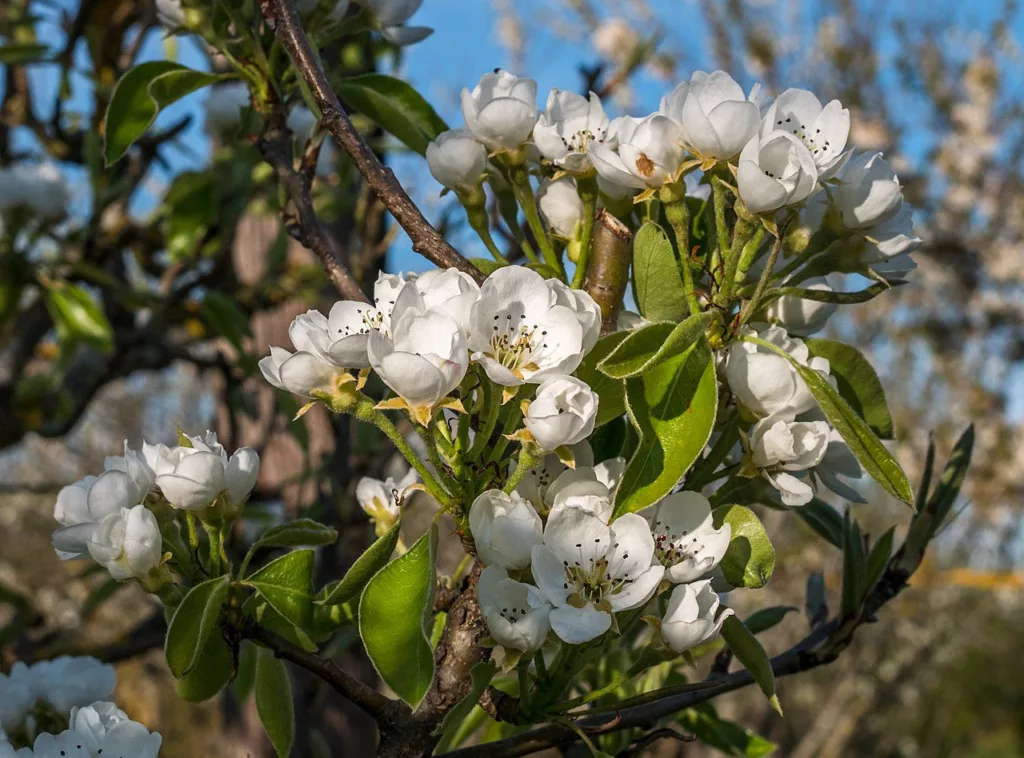
Pear Tree tree, Pyrus communis, mature specimen — species reference for Pacific Arboriculture homeowners in Auburn and the south Puget Sound.
Pear Tree (Pyrus communis). Photo: Basotxerri, CC BY-SA 4.0. Source: https://commons.wikimedia.org/wiki/File:Vitoria_-_Huertas_de_Ol%C3%A1rizu_-_Pyrus_communis_-BT-_01.jpg
Pyrus communis
  • Long-lived backyard fruit producer — trees often productive for 50+ years
  • Showy white spring blooms before leaves emerge
  • European cultivars (Bartlett, Anjou, Bosc) and Asian Pears both perform well in the PNW
  • Most pears require a compatible pollinator nearby

Pear is one of the most reliable and long-lived backyard fruit trees for the south Puget Sound. European cultivars (Bartlett, Anjou, Bosc, Comice) deliver classic dessert and cooking fruit, while Asian Pears (Pyrus pyrifolia) produce crisp, apple-textured fruit with no need for after-harvest ripening. Spring brings a generous white-flower display before the leaves emerge, and well-maintained trees can produce fruit for half a century or more.

Planting and Care

  1. Planting. Plant in full sun with well-drained soil. Pear is more tolerant of heavy clay than apple but still prefers good drainage. Confirm a compatible pollinator is nearby — most cultivars are not self-fertile. Dig a planting hole twice as wide as the rootball, set the graft union 2 inches above grade, backfill with native soil, water in, and mulch.
  2. Watering. Deep weekly watering through the first three growing seasons. Mature pears benefit from supplemental water during fruit-fill (July–September). Pears are more drought-tolerant than apples once established.
  3. Fertilizing. Light feeders. A single application of balanced fruit-tree fertilizer in early spring is sufficient. Excess nitrogen pushes soft growth that increases fire blight susceptibility.
  4. Pruning. Annual dormant-season pruning is critical. Pears tend to grow vertically; train an open-center or modified central-leader structure to bring fruiting wood into reach. Remove water sprouts (vigorous vertical shoots) annually — they rarely produce fruit and increase fire blight risk.

Pear performs exceptionally well in the south Puget Sound — the cool, moist climate matches the species’ preferred range. Watch for fire blight (Erwinia amylovora) in wet springs; remove infected branches 12 inches below visible damage in dry weather to limit spread across Auburn, Kent, and Federal Way orchards.

Need a Pacific Arboriculture ISA Certified Arborist to look at the pear tree on the property?
Call (206) 909-2170 or request a free quote — Pacific Arboriculture provides residential and commercial tree services across Auburn, Kent, Renton, Tacoma, Federal Way, Puyallup, Sumner, Bonney Lake, Maple Valley, and the wider south Puget Sound.

Return to Fruit trees aftercare.

Pear Tree Specs

Mature Height15–20 ft (semi-dwarf); 20–40 ft (standard)
Mature Width15–20 ft
SunlightFull Sun
Growth RateSlow to Moderate
Botanical NamePyrus communis (European); Pyrus pyrifolia (Asian)
Planting questions?
(206) 909-2170
Request a free quote