Apple Tree Aftercare in the Pacific Northwest

Apple Tree

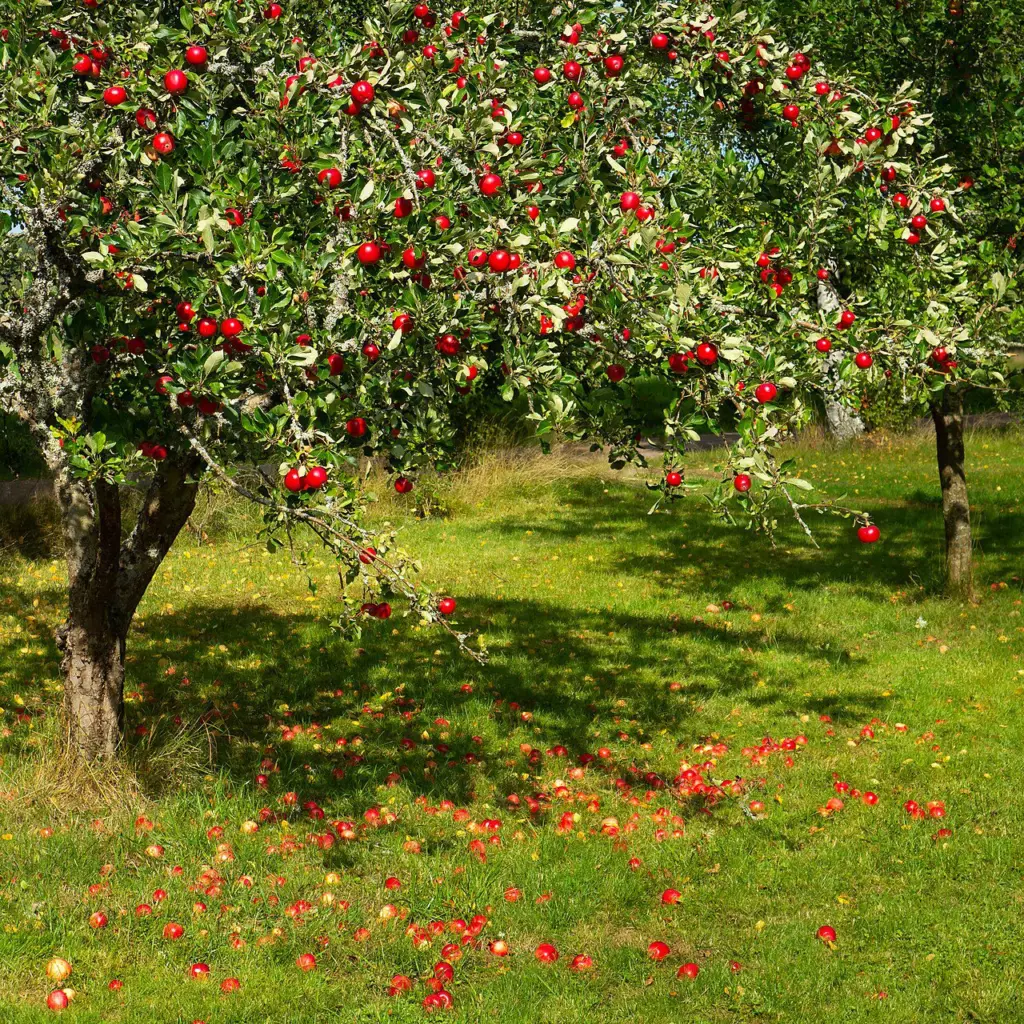
Apple Tree tree, Malus domestica, mature specimen — species reference for Pacific Arboriculture homeowners in Auburn and the south Puget Sound.
Apple Tree (Malus domestica). Photo: W.carter, CC0. Source: https://commons.wikimedia.org/wiki/File:Tree_with_red_apples_in_Barkedal_4.jpg
Malus domestica
  • Most-planted backyard fruit tree across the south Puget Sound
  • Hundreds of cultivars available — dessert, cooking, cider, and storage types
  • Spring flower display followed by summer-through-fall fruit harvest
  • Most cultivars require a compatible pollinator within 50 feet

Apple is the most-planted backyard fruit tree across the south Puget Sound, with cultivars available for every use from fresh eating to cider to long-storage cooking apples. Spring brings a generous white-pink flower display, followed by fruit ripening anywhere from late July (early types) through October (late storage cultivars). Most apple cultivars require a compatible pollinator within 50 feet — plan accordingly when selecting trees.

Planting and Care

  1. Planting. Plant in full sun with well-drained soil. Choose semi-dwarf rootstock for backyard orchards — easier to maintain and harvest. Confirm the chosen cultivar has a compatible pollinator nearby (most apples are not self-fertile). Dig a planting hole twice as wide as the rootball, set the graft union 2 inches above grade, backfill with native soil, water in, and mulch.
  2. Watering. Deep weekly watering through the first three growing seasons. Mature apples benefit from supplemental water during fruit-fill (June–August) — drought stress at this stage causes small fruit and premature drop.
  3. Fertilizing. A single application of balanced fruit-tree fertilizer in early spring. Avoid late-summer fertilization that pushes soft growth vulnerable to winter damage and increases scab disease pressure.
  4. Pruning. Annual dormant-season pruning (December–February) is critical. Maintain a central leader or open-vase structure depending on cultivar, remove crossing and shading branches, and thin spurs to maintain fruit size. Summer pruning is also useful to reduce vigor and improve fruit color.

Apple is the most reliable backyard fruit tree in the south Puget Sound. Watch for apple scab (Venturia inaequalis) in wet years — sanitation (removing fallen leaves) and resistant cultivars limit pressure across Auburn, Kent, Federal Way, and surrounding cities.

Need a Pacific Arboriculture ISA Certified Arborist to look at the apple tree on the property?
Call (206) 909-2170 or request a free quote — Pacific Arboriculture provides residential and commercial tree services across Auburn, Kent, Renton, Tacoma, Federal Way, Puyallup, Sumner, Bonney Lake, Maple Valley, and the wider south Puget Sound.

Return to Fruit trees aftercare.

Apple Tree Specs

Mature Height10–15 ft (semi-dwarf); 15–25 ft (standard)
Mature Width10–20 ft
SunlightFull Sun
Growth RateModerate
Botanical NameMalus domestica
Planting questions?
(206) 909-2170
Request a free quote